

Taught in person
The scholars
Our courses give students the unique ability to connect with local scholars and build personal relationships with them.
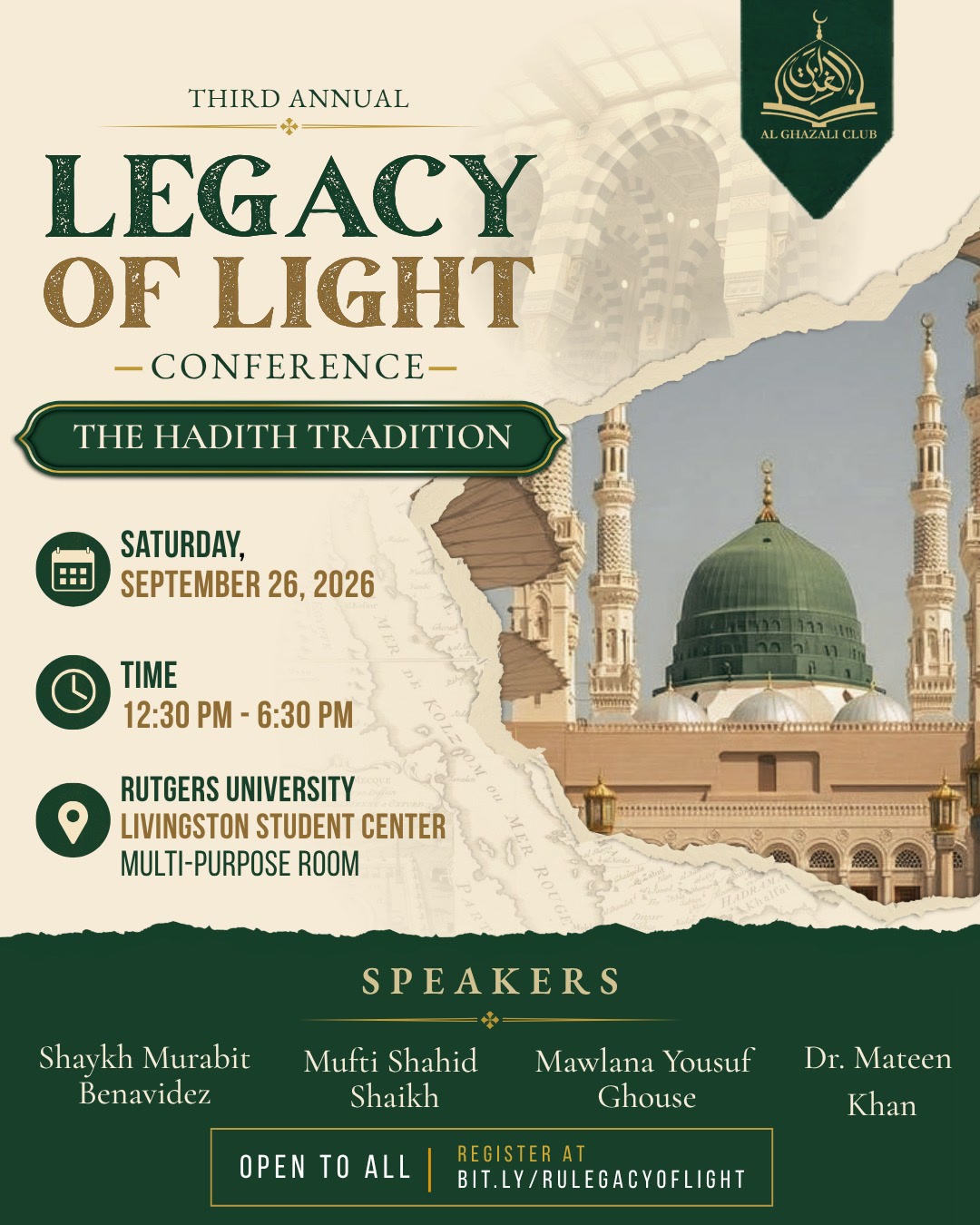
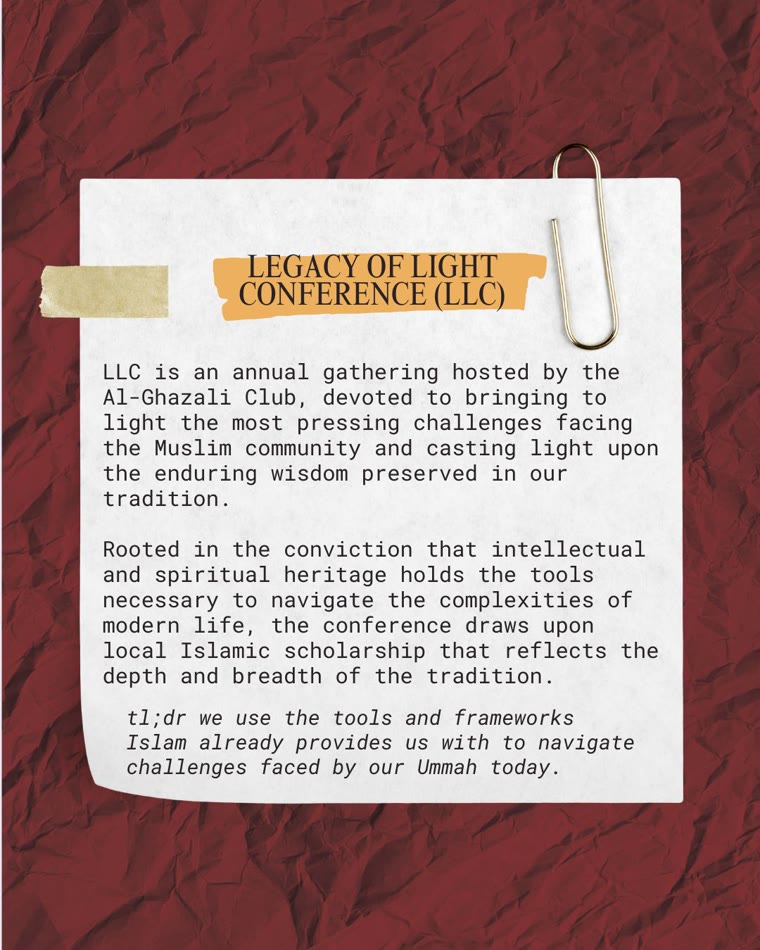
Join us for our annual Legacy of Light Conference!
Open to Everyone, Not Just Rutgers Students!
See event details and speaker information below.
Register Now or Purchase Tickets Directly Below
Open a volume
Mufti Muajul Islam Chowdhury began his Islamic education in his home state of New York, at the Astoria Islamic Center, with the memorization of the Quran. Having completed it, he pursued his passion for Quranic recitation by studying the various modes of recitation (Qirā’ah). His desire for a broader education in the Islamic sciences led him to Madrasah Arabiyyah Islamiyyah in Azaadville, South Africa, where he enrolled in the Alim course. On graduating from that rigorous six-year program he went on to the Darul Iftaa Mahmudiyyah in Durban, specializing in the issuing of legal verdicts (iftā’) under Mufti Ebrahim Desai (may Allah have mercy on him). He has since returned to New York, where he serves in various capacities at Masjid al-Ikhlas in Astoria.
Mawlana Yousuf Ghouse grew up in the United States, often wondering how starkly different life was for those mired in poverty with little hope for the future. He knew he wanted to help; he did not know how. After an undergraduate degree in mathematics and economics at the University of Illinois at Chicago, he spent a number of years studying the Islamic sciences at Darul Uloom Zakariyya in Johannesburg, South Africa, where he came face to face with people from all over the world and with the lived experience of poverty. That, together with his late mother’s unyielding desire to leave a positive mark, became the catalyst for the Brighter Futures Foundation. He has since led its work alongside teaching at DarusSalam Seminary in Lombard, Illinois.
Dr. Mateen Khan is a distinguished emergency physician who has also pursued extensive training in the Islamic sciences. After successfully completing the esteemed Dars Niẓāmiyya curriculum at Darul Uloom Canada and receiving ijāzāt (scholarly authorizations) in a range of classical disciplines, Dr. Khan relocated to New Jersey in 2014. Over the past decade, he has been actively involved in issuing formal jurisprudential responses, engaging in scholarly writing, and delivering lectures on various Islamic topics. He has taught numerous courses, including weekly sessions on ‘Aqīdah (Islamic theology) and Fiqh (Islamic jurisprudence) at Rutgers University as part of his work with the Al-Ghazali Club. This year, he is teaching the club’s weekly Fiqh class, working through the rulings that come up in day-to-day life.
Legacy of Light III The Hadith Tradition
Why should Muslims study Hadith? How do the sayings and actions of the Prophet ﷺ shape our daily lives through Fiqh? And how has the Sunnah been preserved across generations?
Scholars will introduce the foundations of Hadith studies and the rigorous methodology by which the Sunnah has been kept: its structure and terminology, its place in the Hanafi and Maliki schools, and the answers to modern critiques of it.
Hadith is not merely a historical discipline. It is a living source of guidance, meant to shape our character, our worship, and our relationship with Allah.
Trouble with the form? Open it on Zeffy.
Who we are
Rutgers Ghazali Club was founded with the goal of providing Rutgers students an avenue to learn the deen in the same traditional manner that it has been taught for centuries, instructed by local scholars.
At the heart of the club is our weekly hour-long Wednesday class, designed to teach you everything you will need to live the rest of your life as a Muslim.
The weekly class
That Wednesday hour is one syllabus, taught over four years. These are its three stages.
Creed — what a Muslim believes, and why
Rulings — worship, and dealings between people
How to practically live a fulfilling and spiritually enriched Islamic life
College might be one of the last chances many of us get to formally learn our religion,
so we implore you avail this opportunity to work towards not only your worldly life, but to prepare for the afterlife as well.
Our courses give students the unique ability to connect with local scholars and build personal relationships with them.
We also have sisters’ only class taught by female scholars, focusing on women specific matters of Islam, and the ability for sisters to connect and form relationships with them.
We also host one-time events on specific topics.
Now meeting
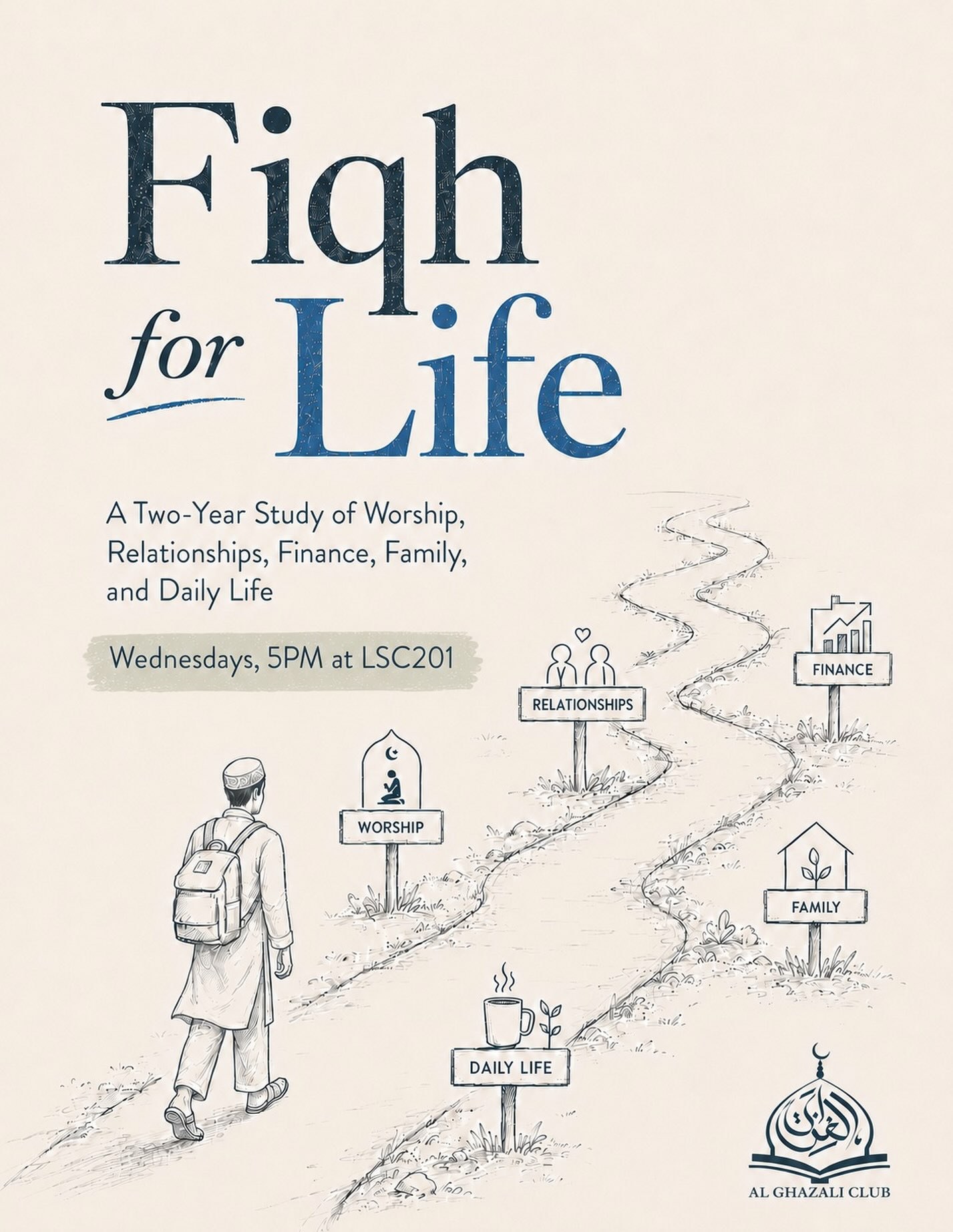
Fiqh for Life
Join us for our fiqh classes with Shaykh Mateen as we explore Islam within our daily lives.
Brothers & sisters
Wednesdays, 5–6 PM at LSC 201 — two weeks elsewhere
From , with Shaykh Mateen
No registration required Just come to the room.
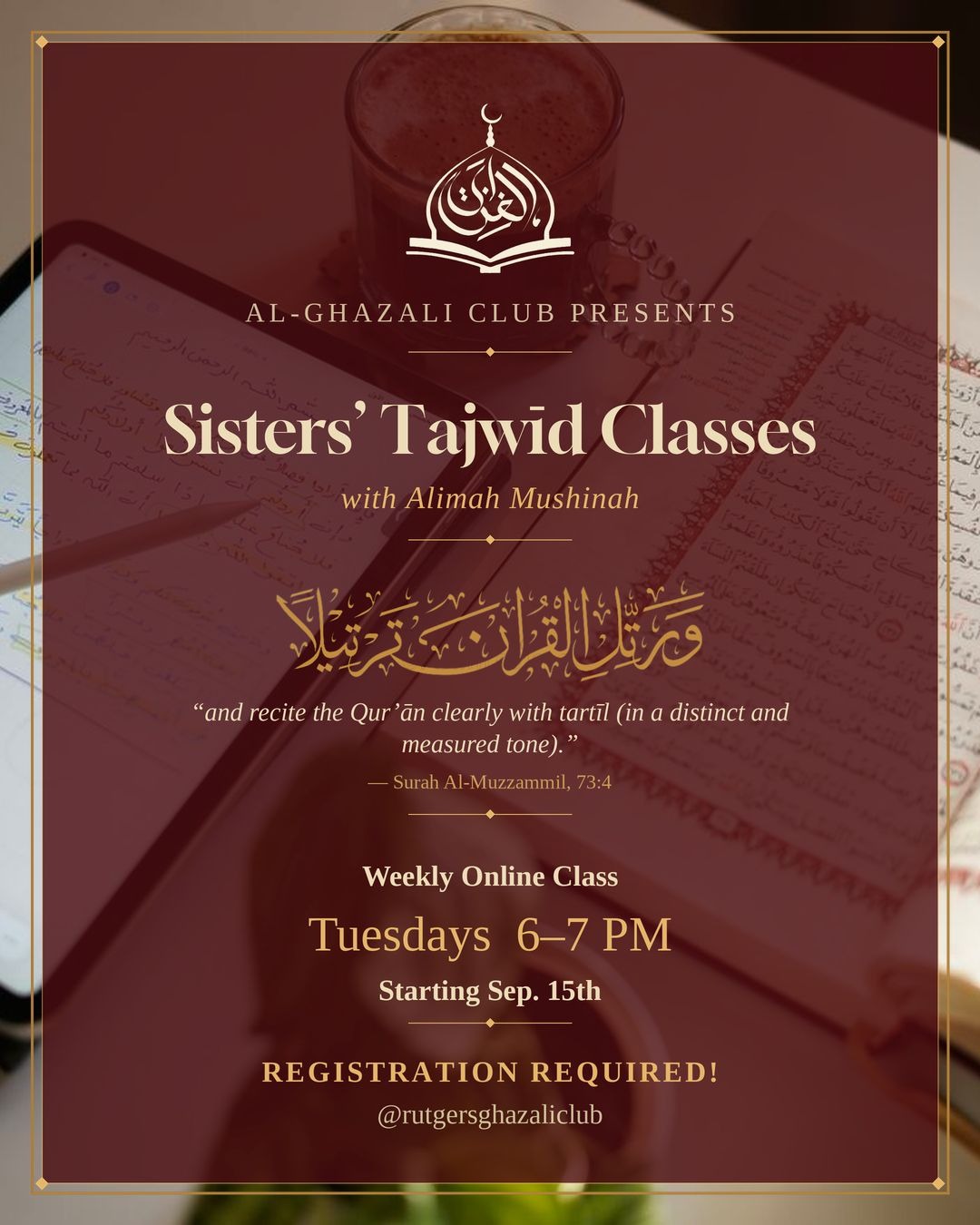
Sisters’ Tajwīd Classes
وَرَتِّلِ الْقُرْآنَ تَرْتِيلًا
— Surah Al-Muzzammil, 73:4
Sisters only
Tuesdays, 6–7 PM · Online
From , with Alimah Mushinah
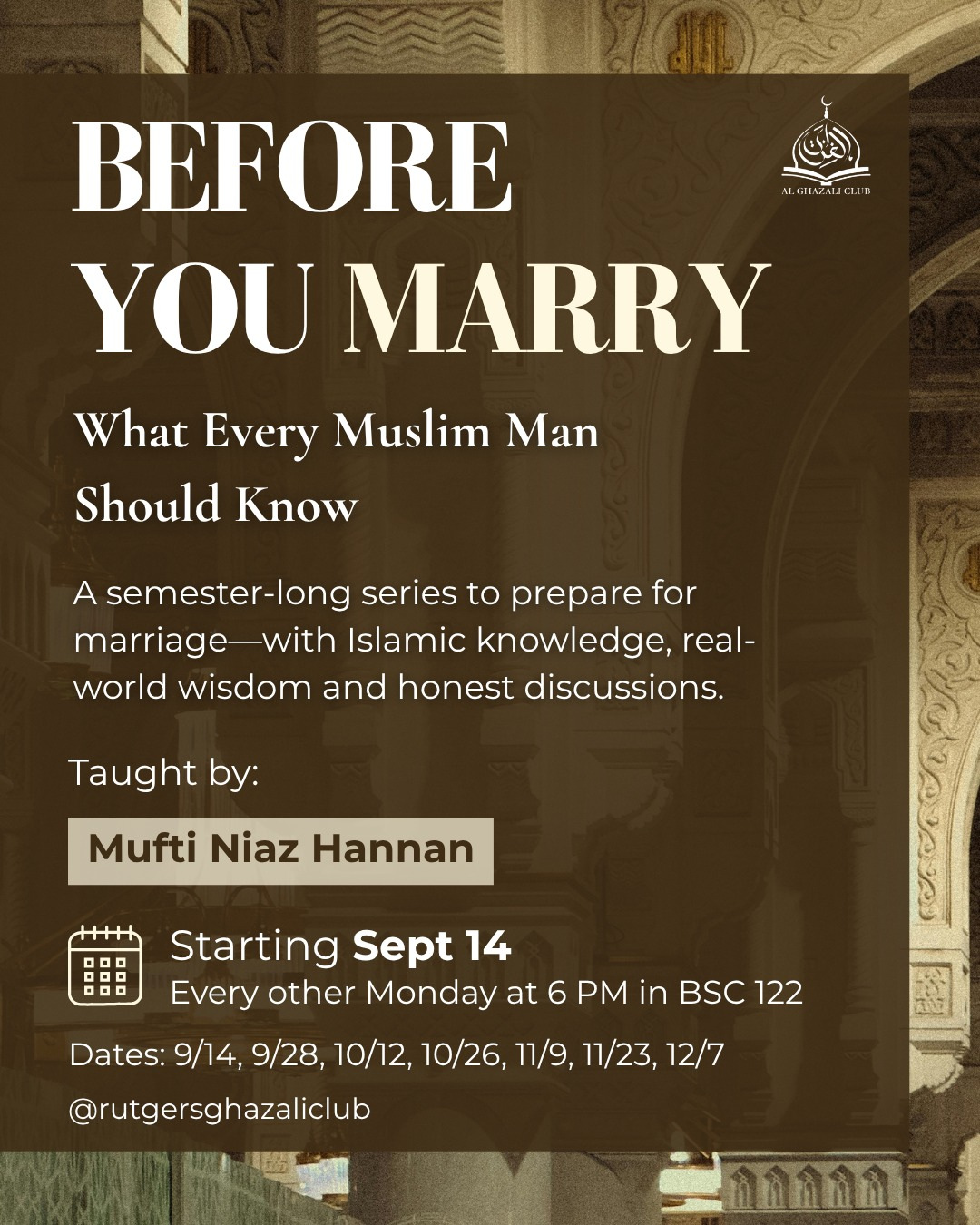
Marriage in Islam
What every Muslim man should know. A semester-long series to prepare for marriage—with Islamic knowledge, real-world wisdom and honest discussions.
Brothers only
Every other Monday, 6–7 PM at BSC 122
From , with Mufti Niaz Hannan
No registration required Just come to the room.
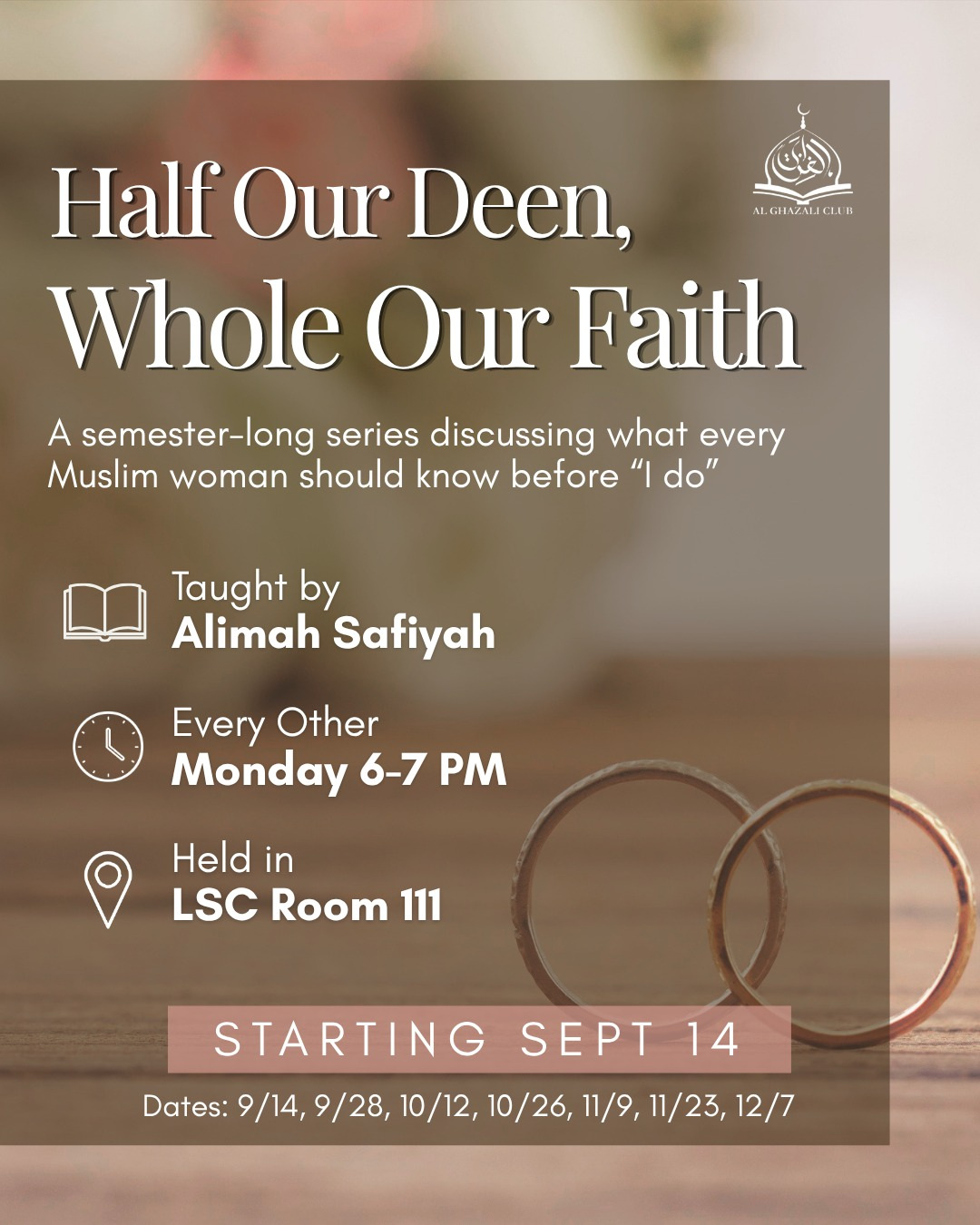
Marriage in Islam
A semester-long series discussing what every Muslim woman should know before “I do”.
Sisters only
Every other Monday, 6–7 PM at LSC 111
From , with Alimah Safiyah
No registration required Just come to the room.
The archive
Fall 2025
The Tahawi Creed
Fall 2024
Exploring Imam Ghazali’s Ihya
A transformative course designed to guide you on the path to living a fulfilling and spiritually enriched Islamic life. Through the timeless wisdom of Imam Ghazali, we will delve deep into the teachings that harmonize the mind, heart, and soul, uncovering practical insights that can be applied to our daily lives. Whether you seek to deepen your spiritual practice or find balance in your life, this course will provide the tools and understanding needed to align your inner and outer worlds in harmony with Islamic principles.
Spring 2024
Halal Handbook
Fiqh guidelines for daily affairs.
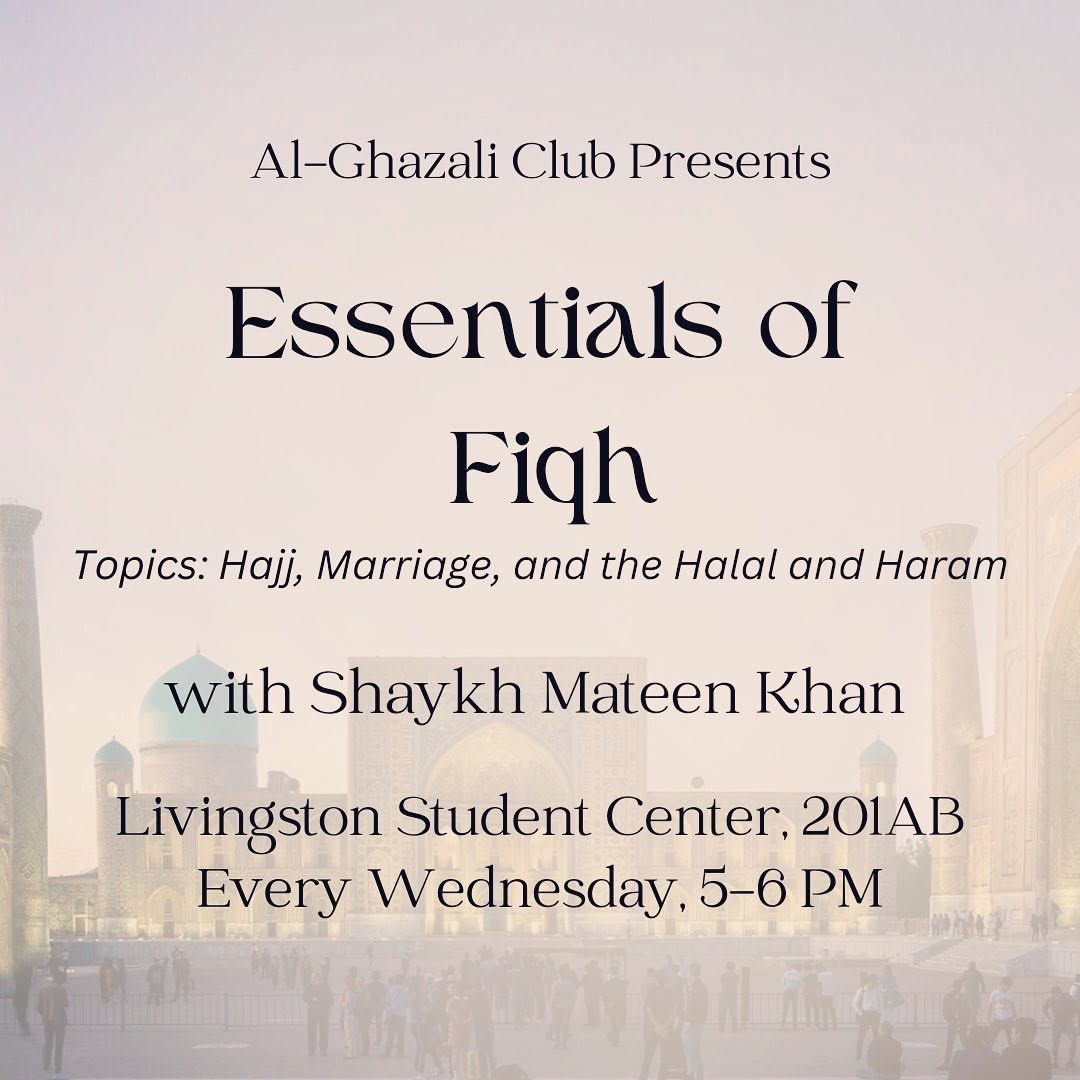
Fall 2023
Hajj, marriage, and the halal and haram.
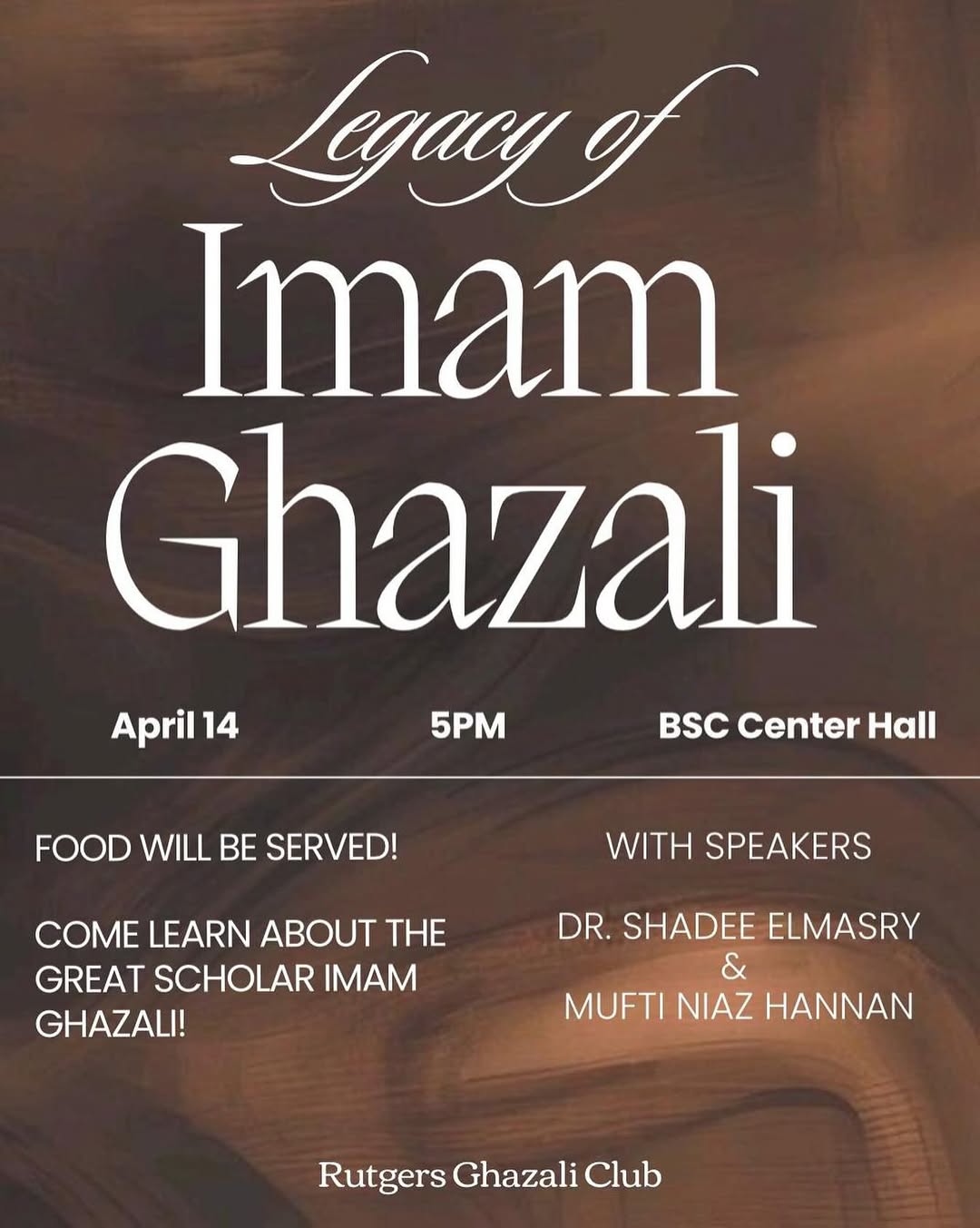
Legacy of Imam Ghazali
2026
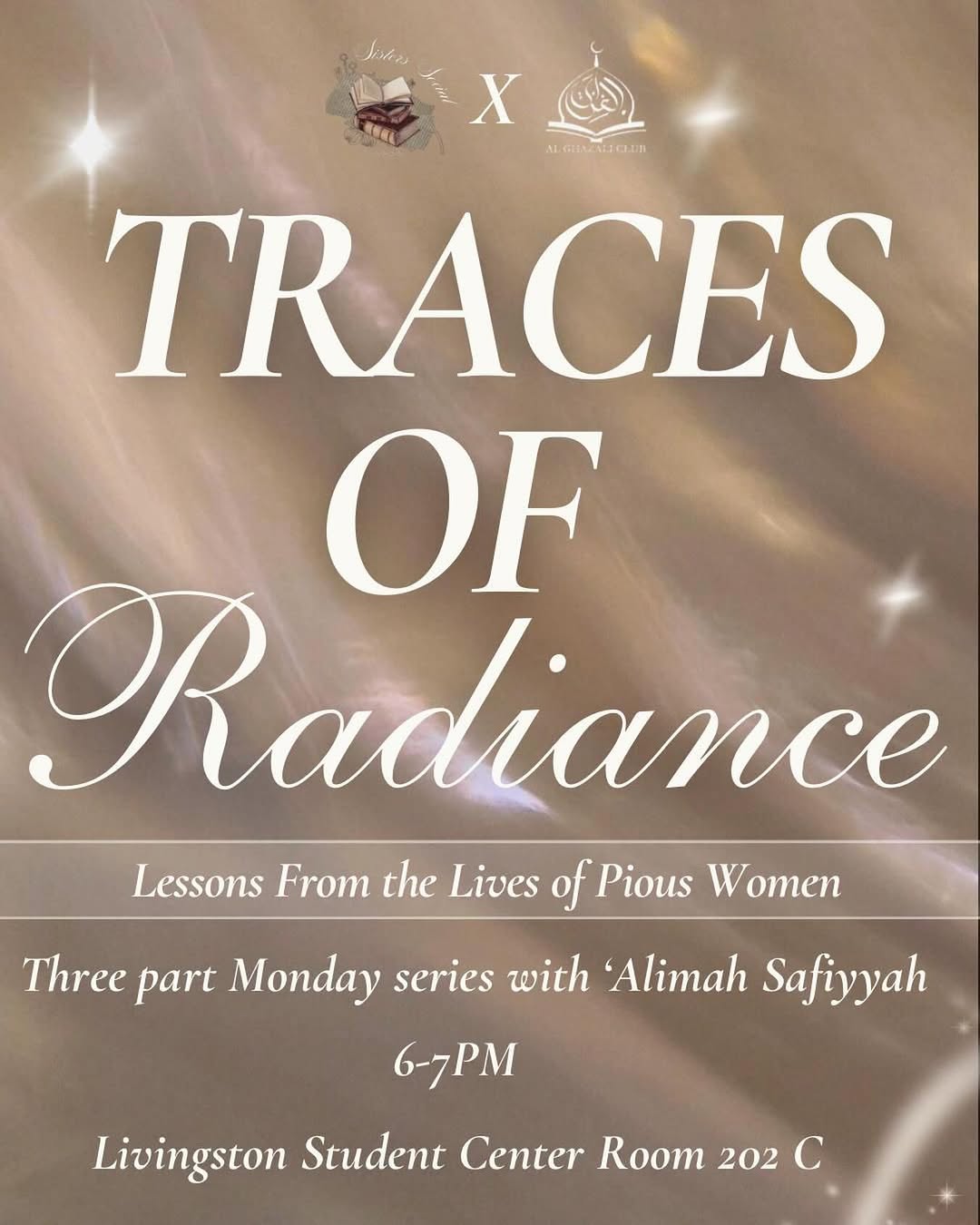
Traces of Radiance
2026

Ice Skating Event
2026
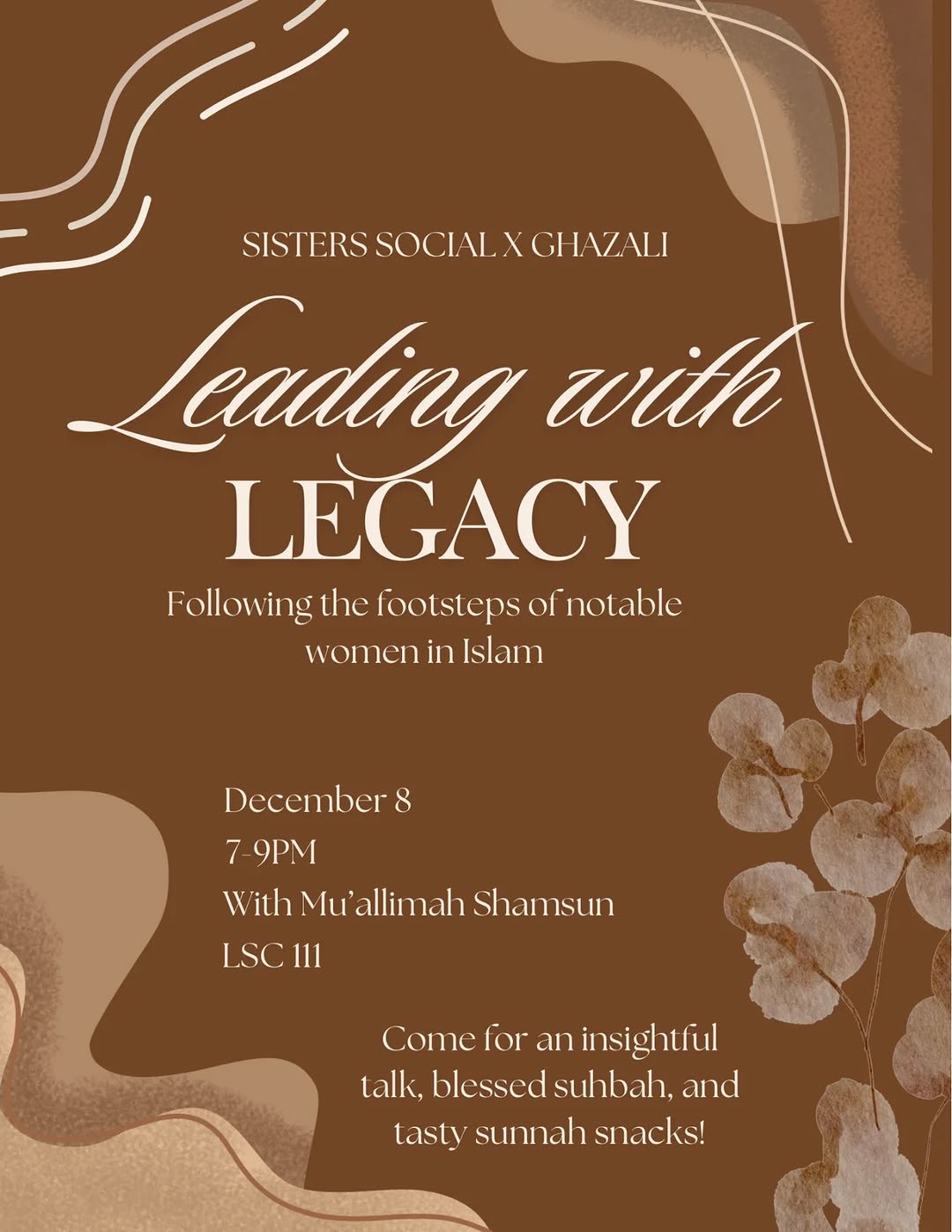
Leading with Legacy
2025
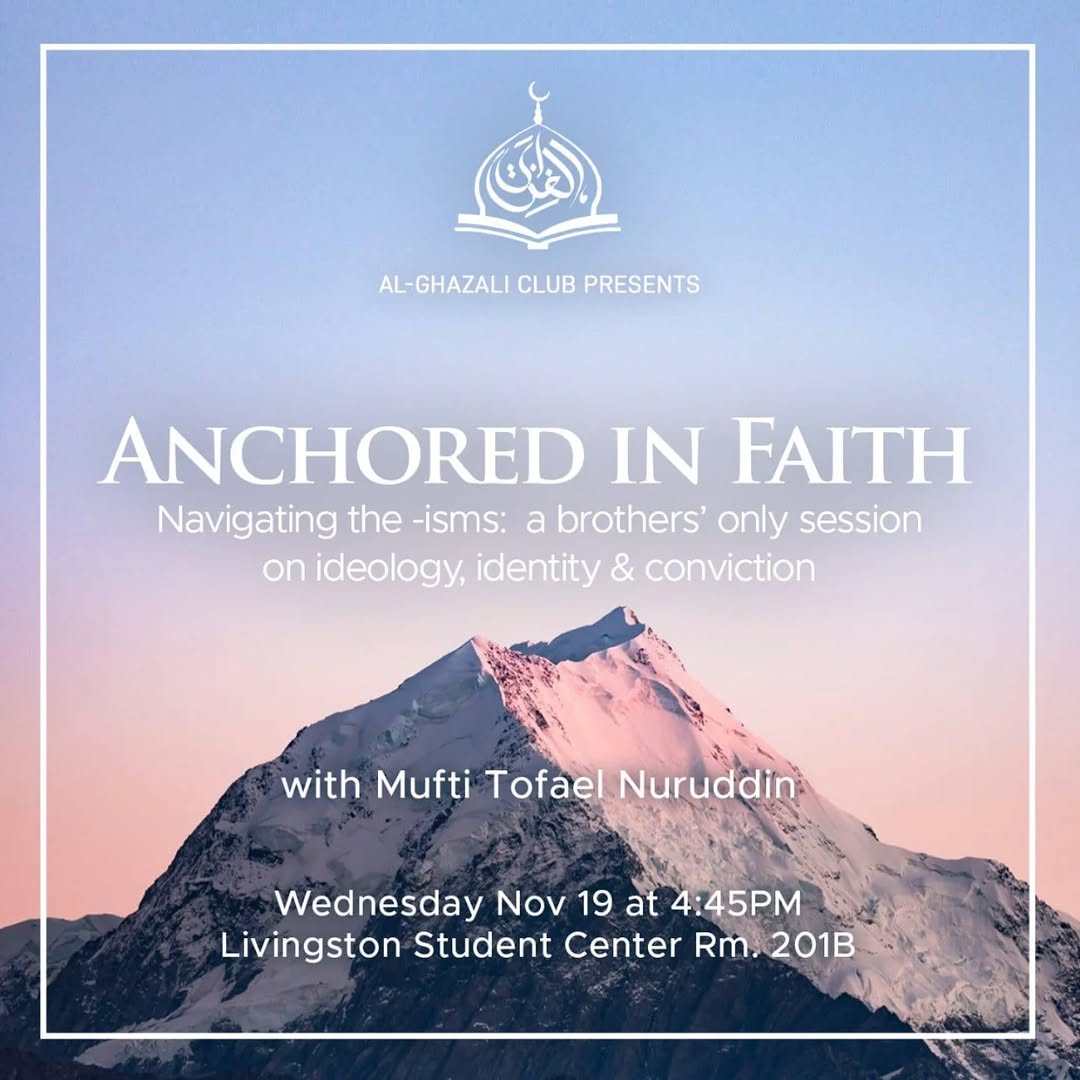
Anchored in Faith
2025
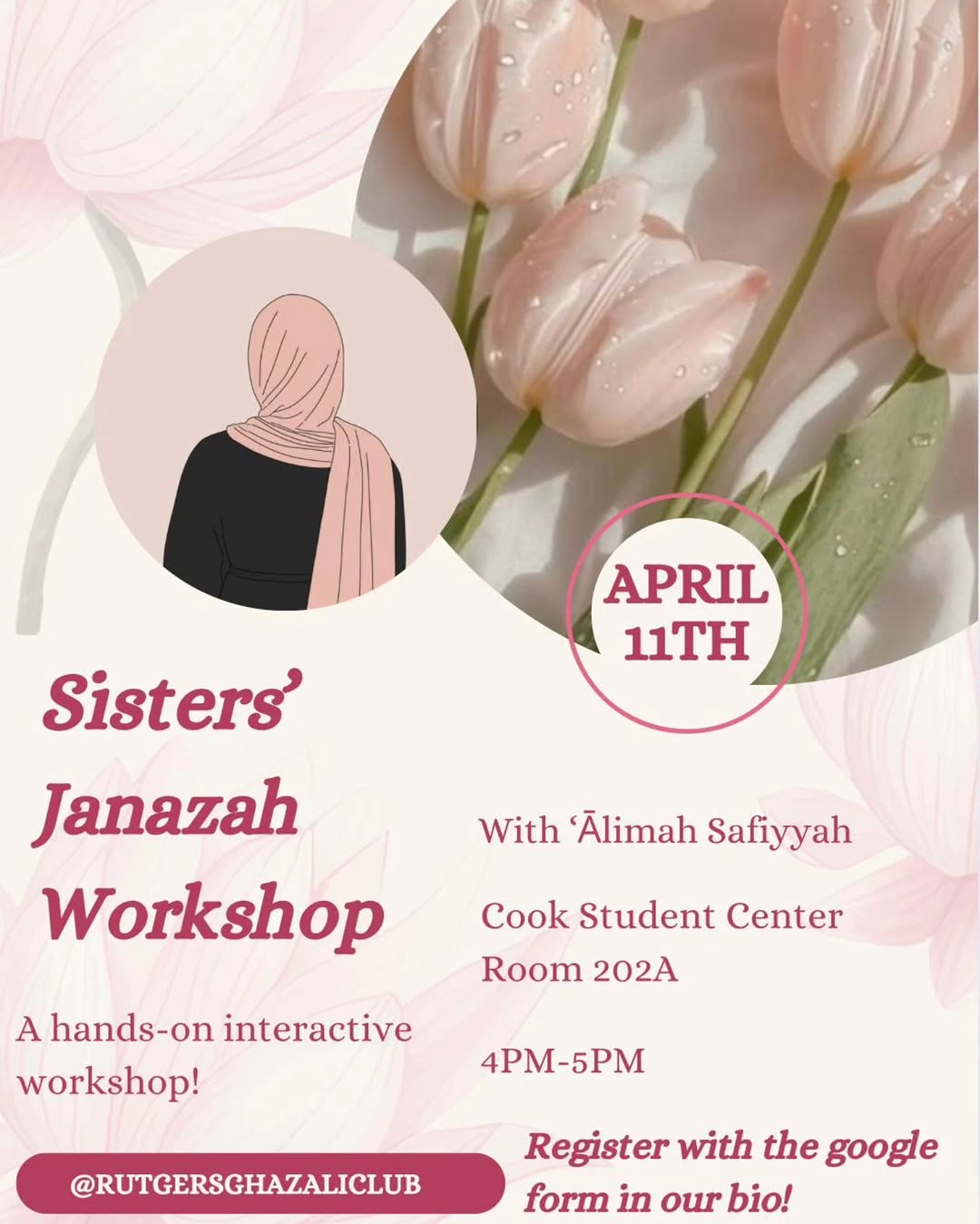
Sisters’ Janazah Workshop
2025
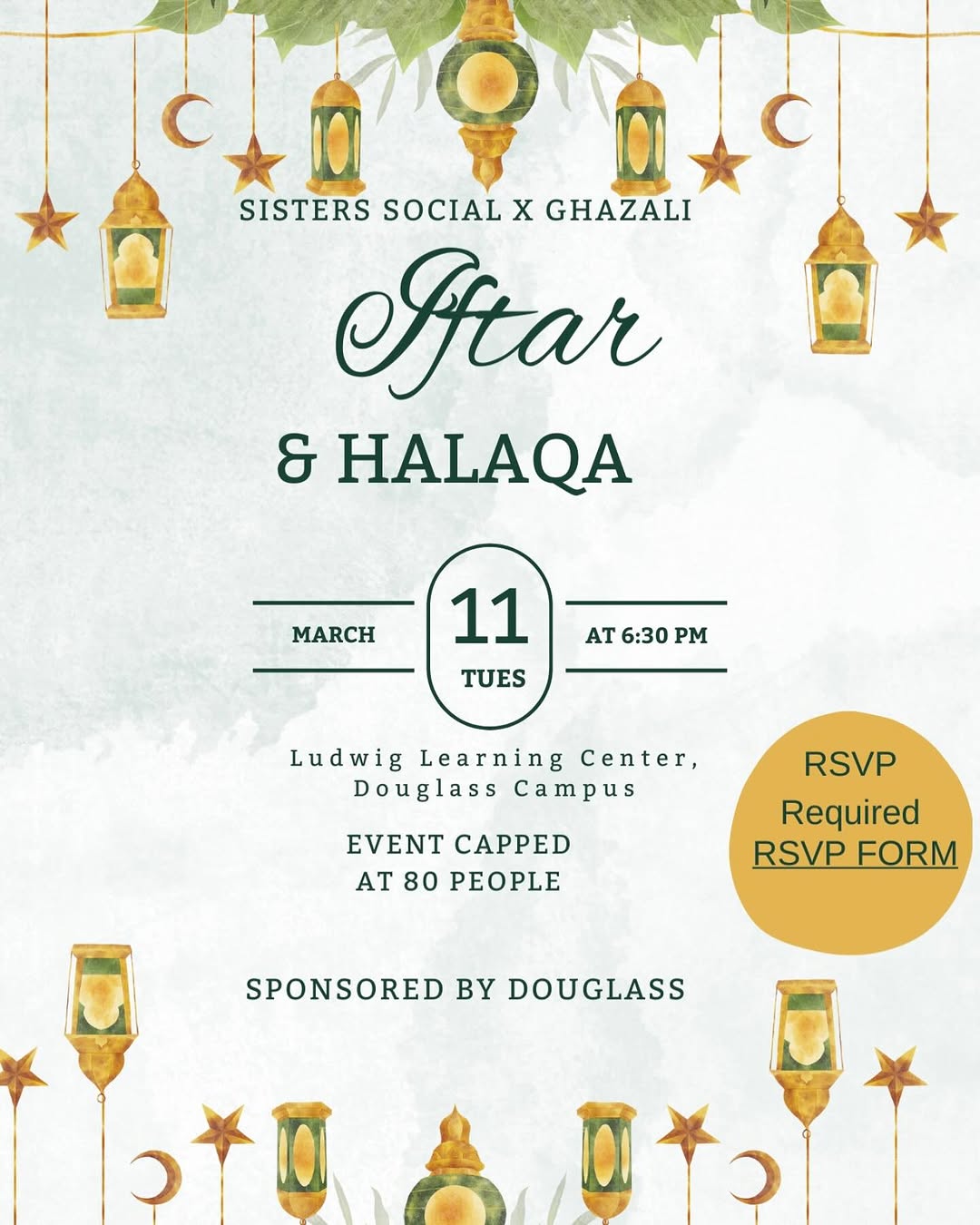
Iftar & Halaqa
2025
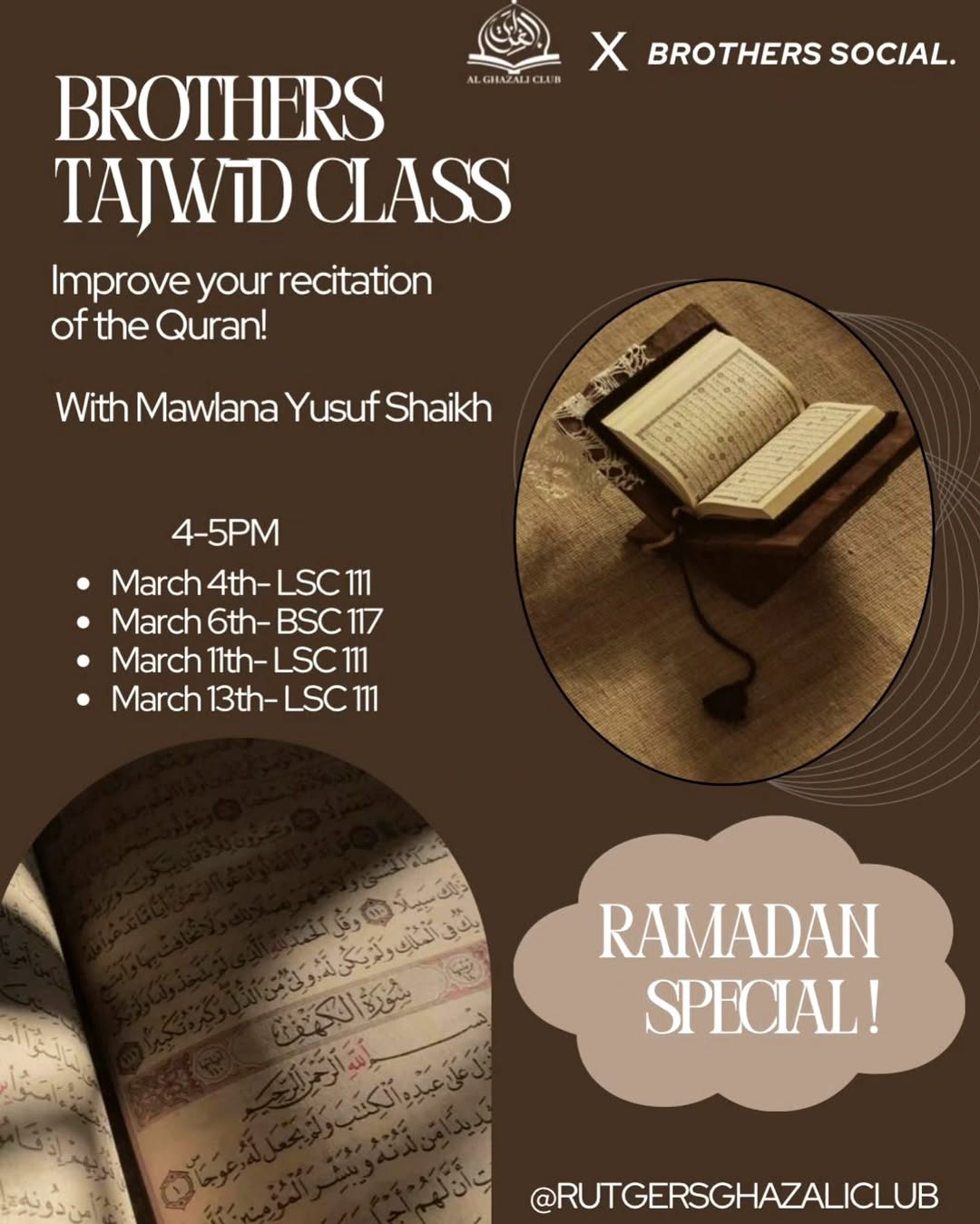
Brothers Tajwīd Class
2025
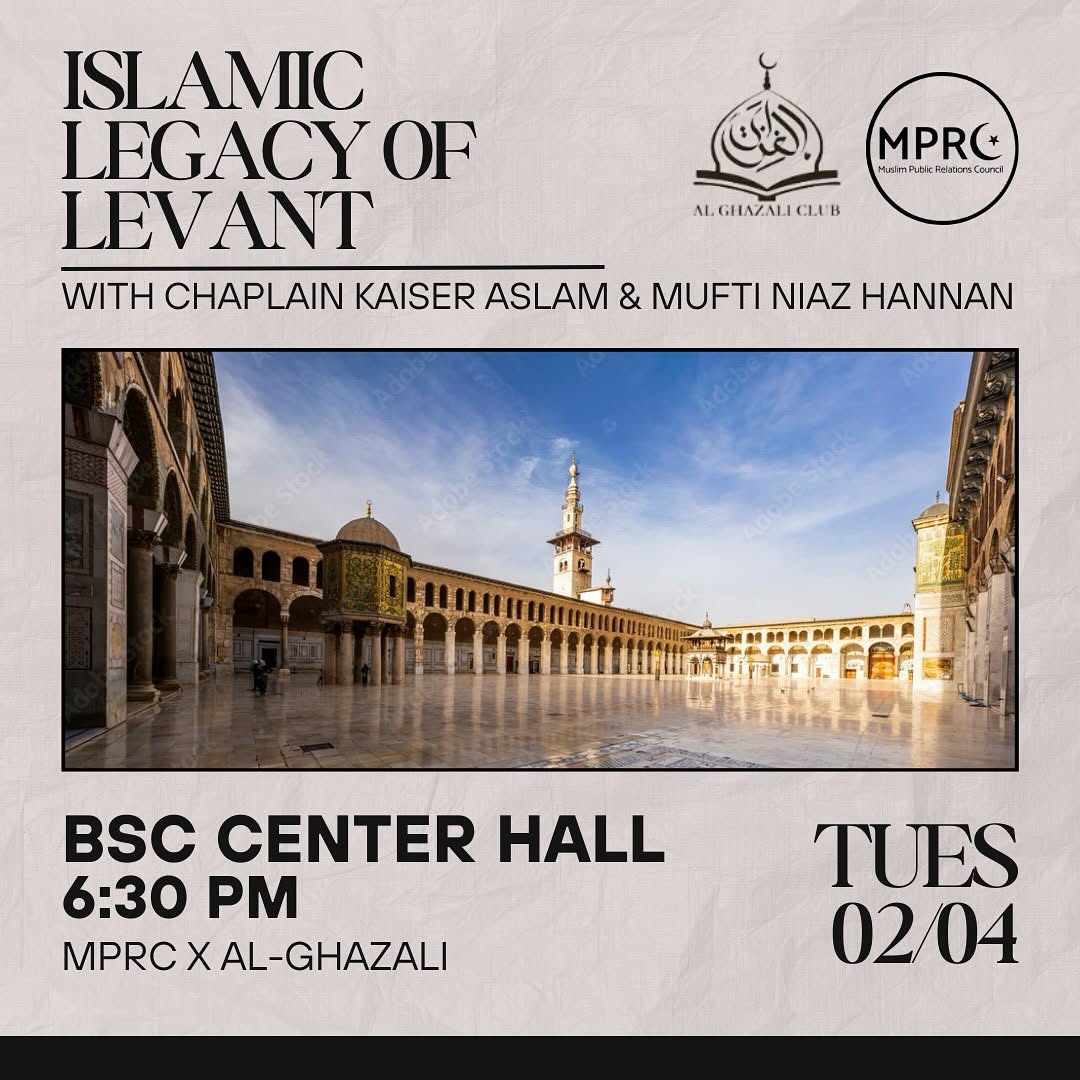
Islamic Legacy of Levant
2025
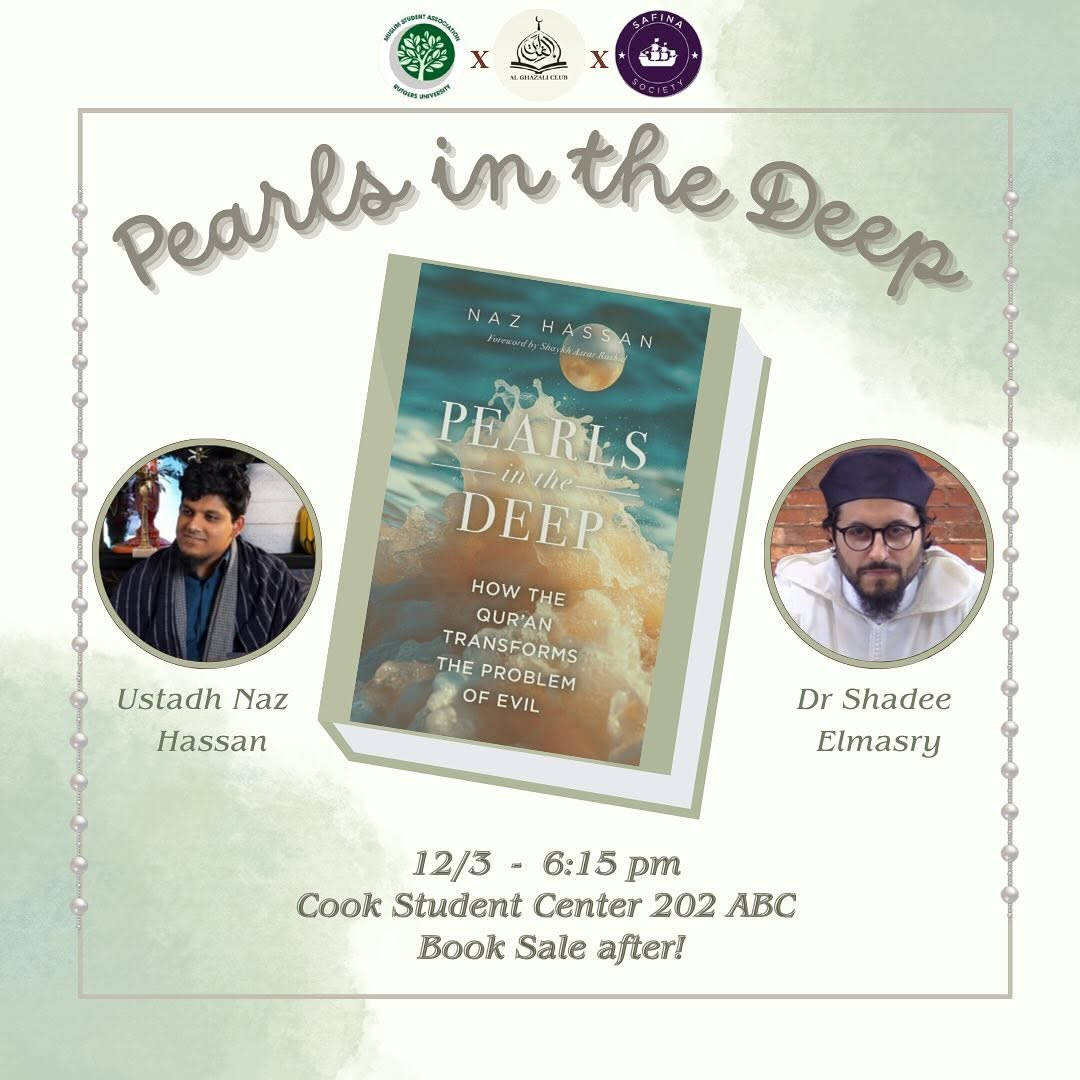
Pearls in the Deep
2024
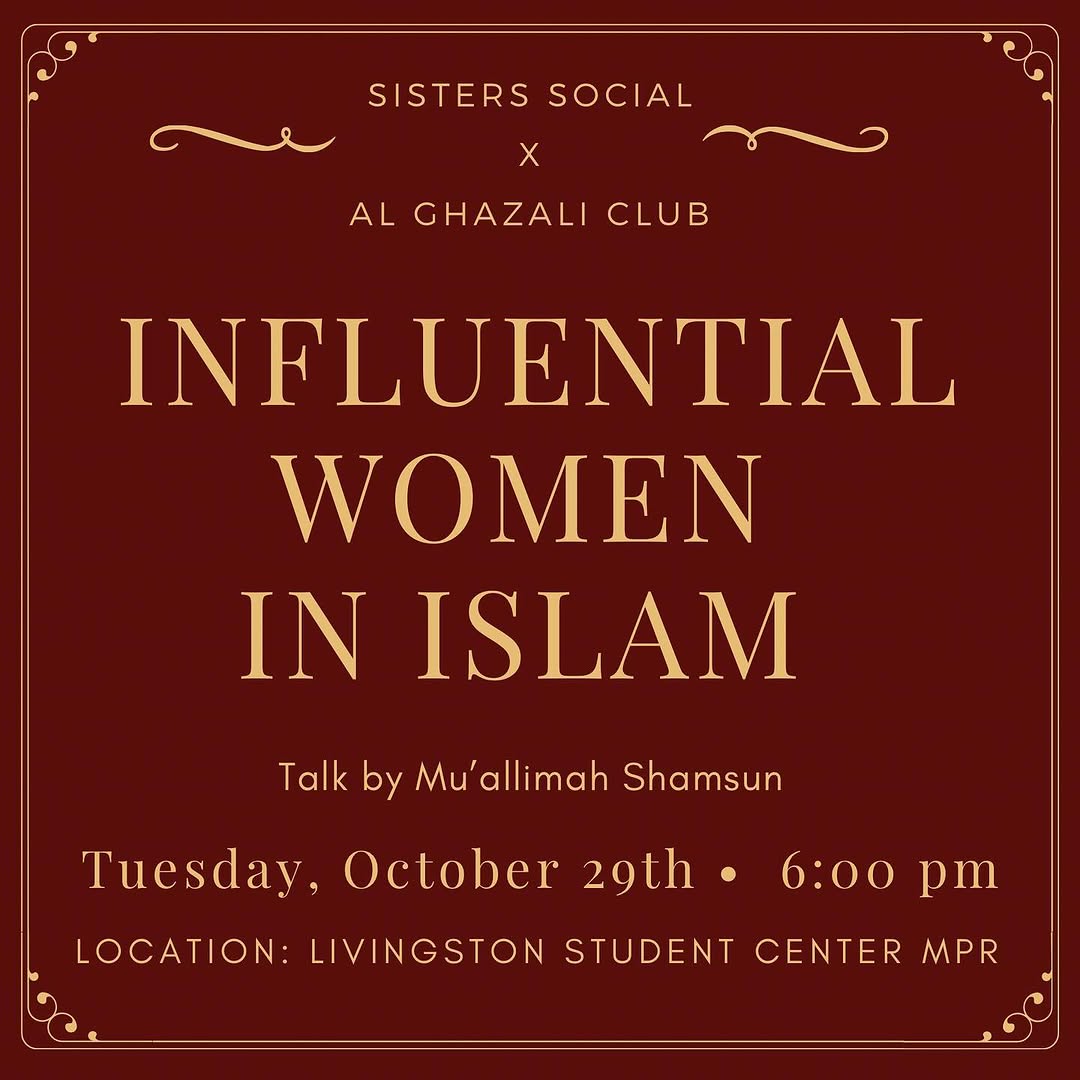
Influential Women in Islam
2024
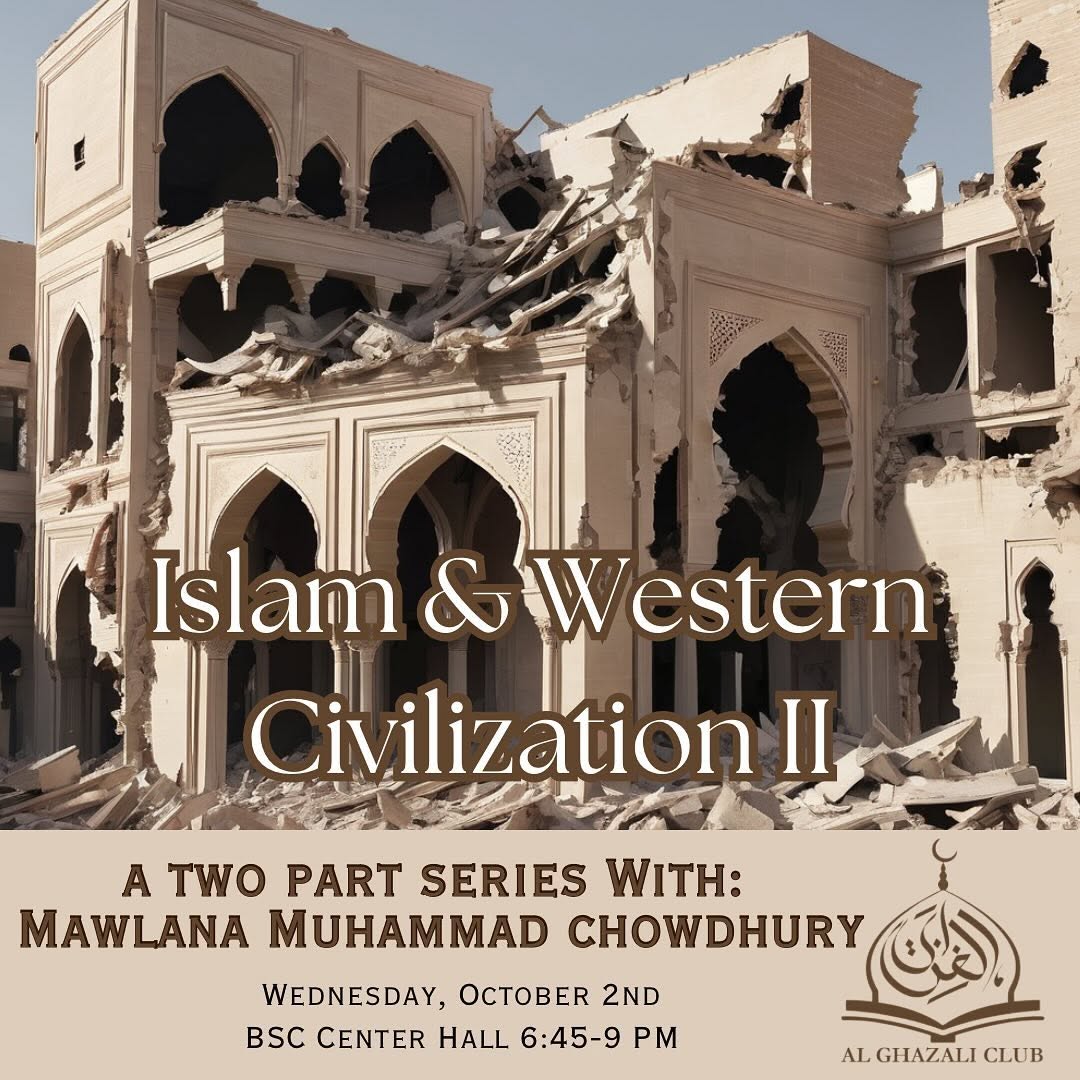
Islam & Western Civilization II
2024
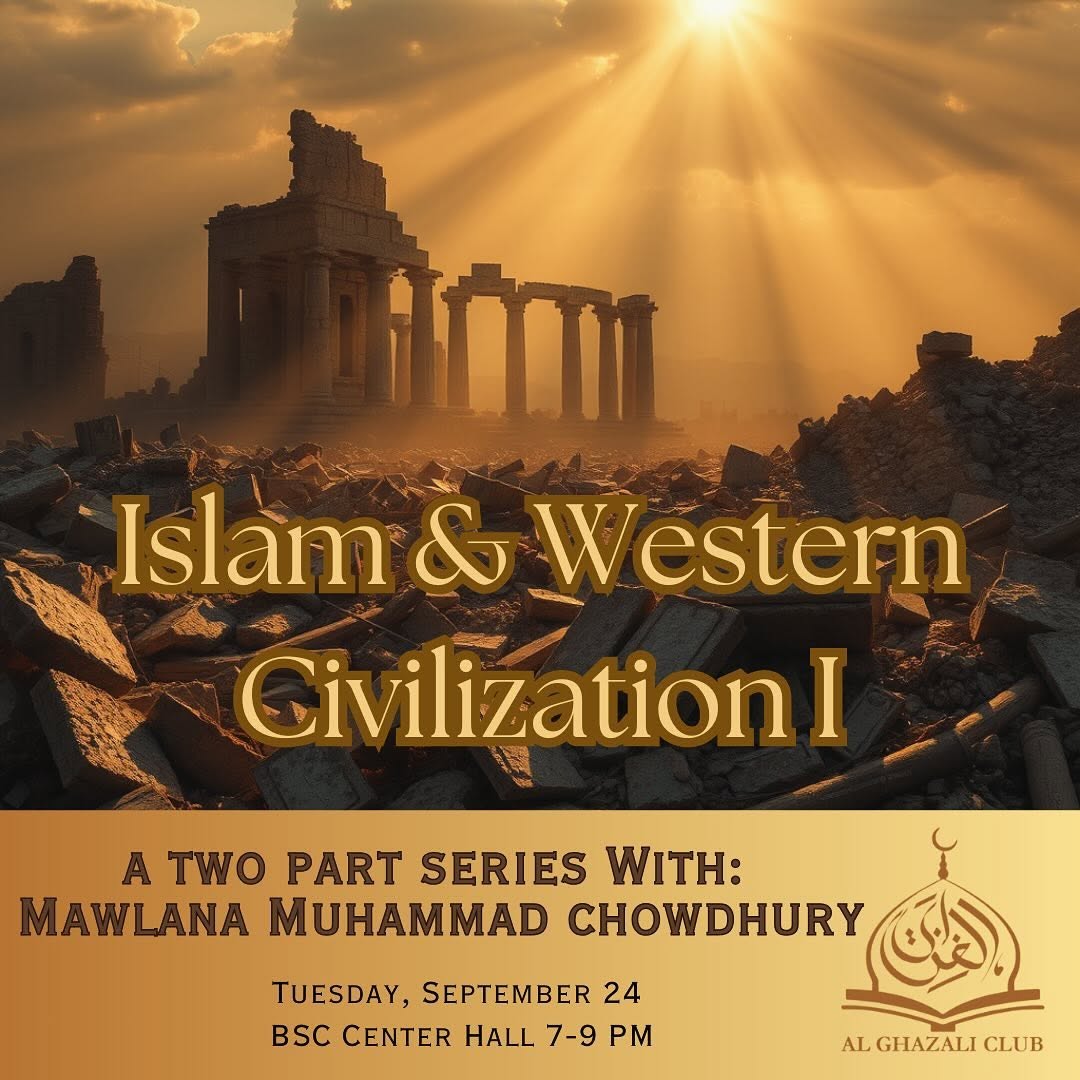
Islam & Western Civilization I
2024
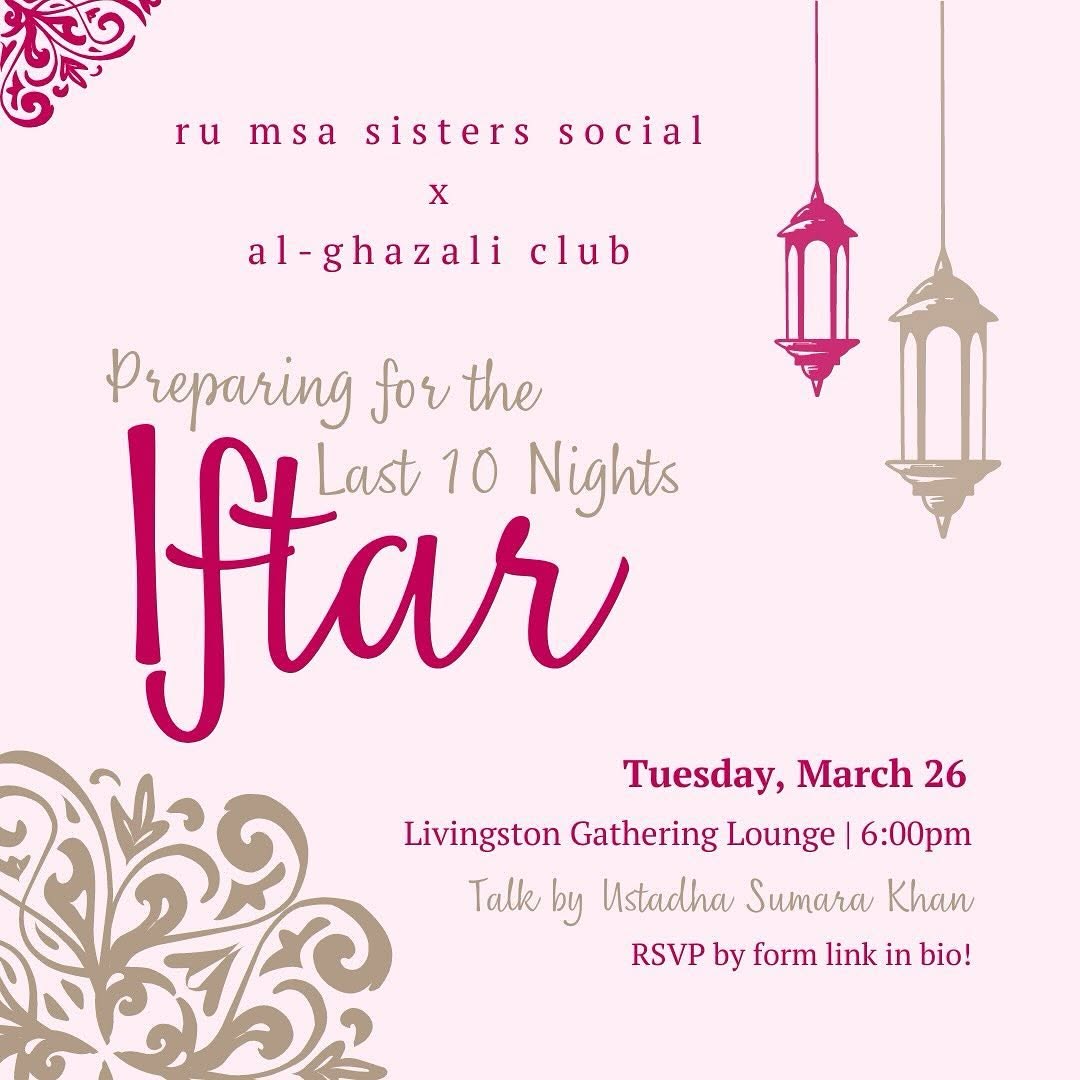
Last 10 Nights Iftar
2024
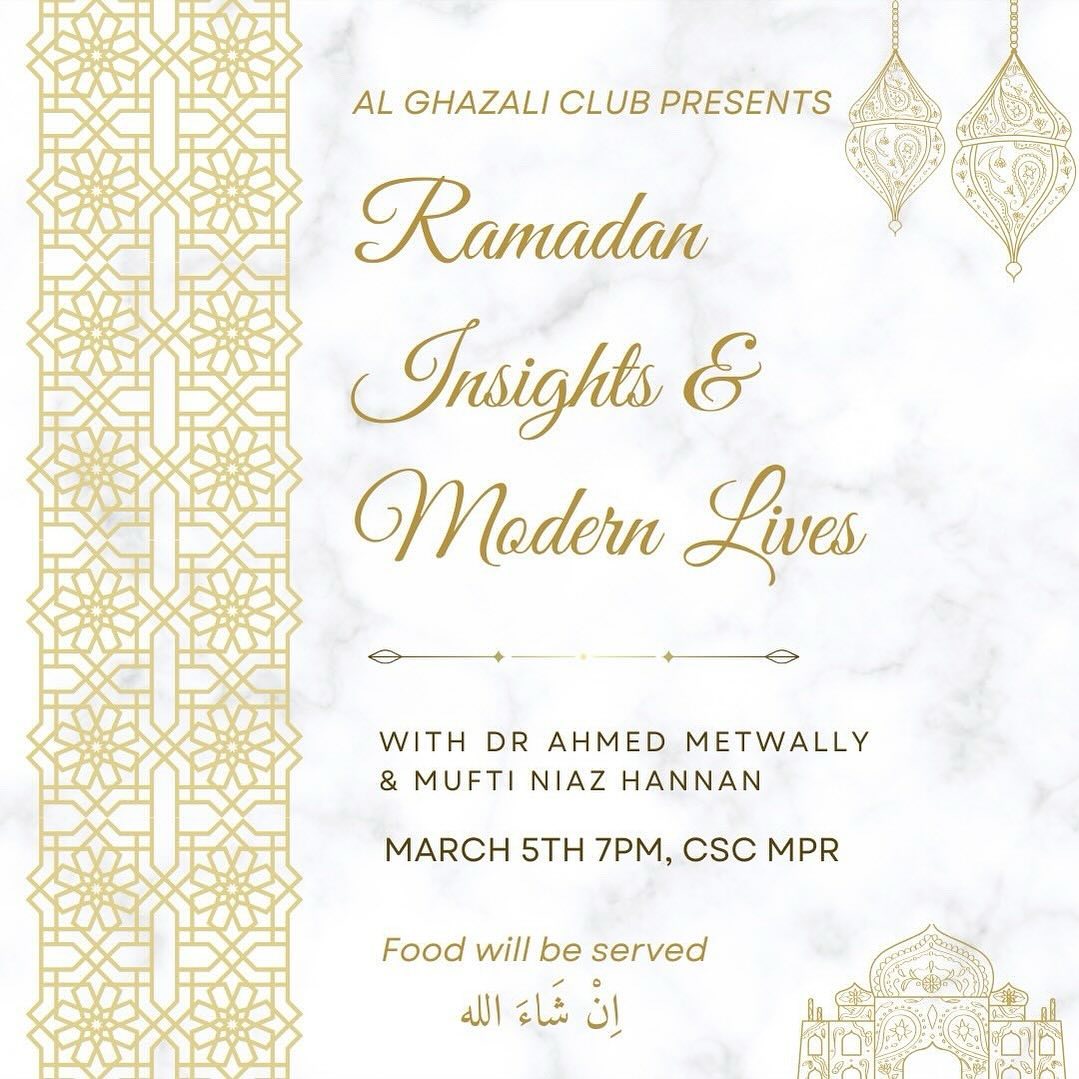
Ramadan Insights & Modern Lives
2024
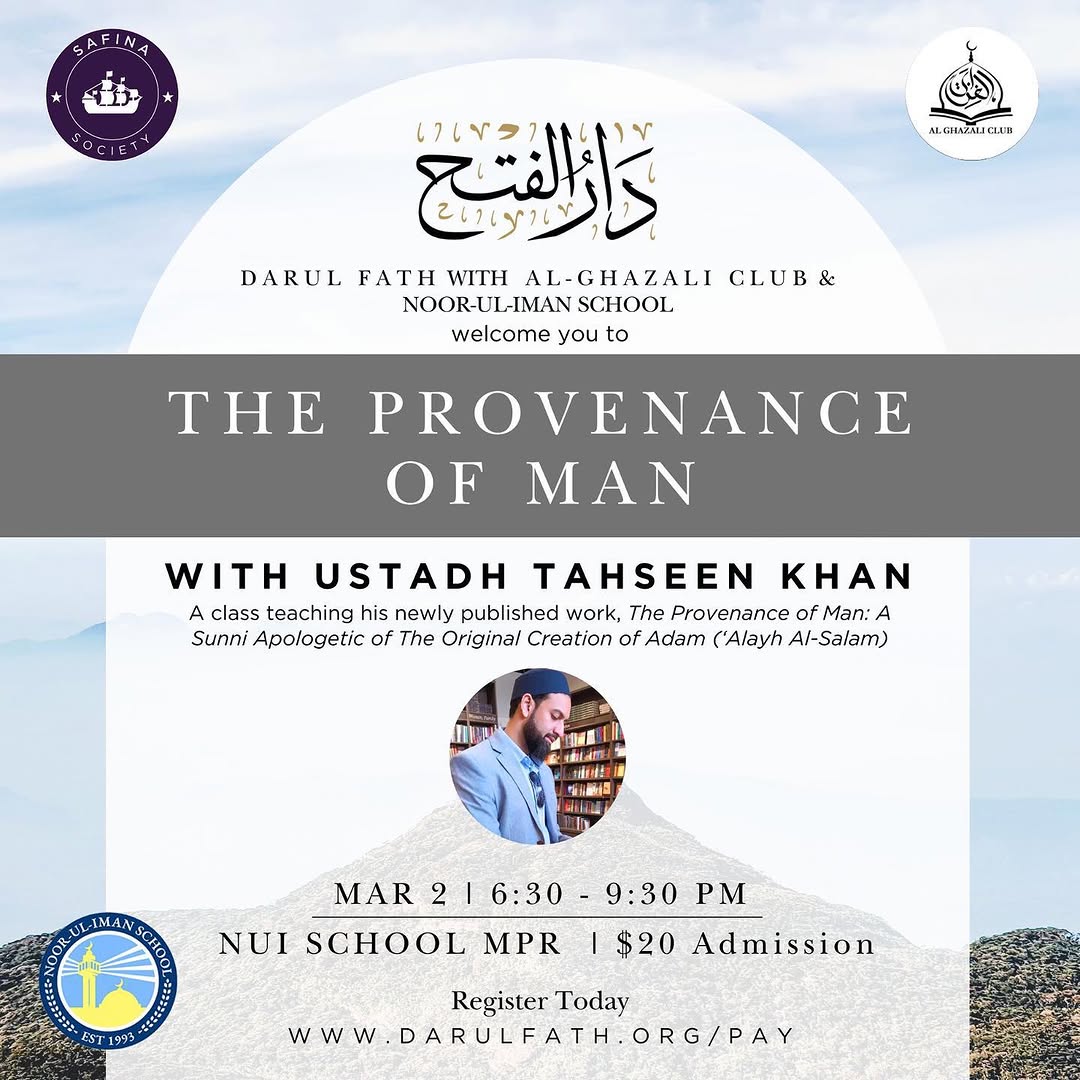
The Provenance of Man
2024
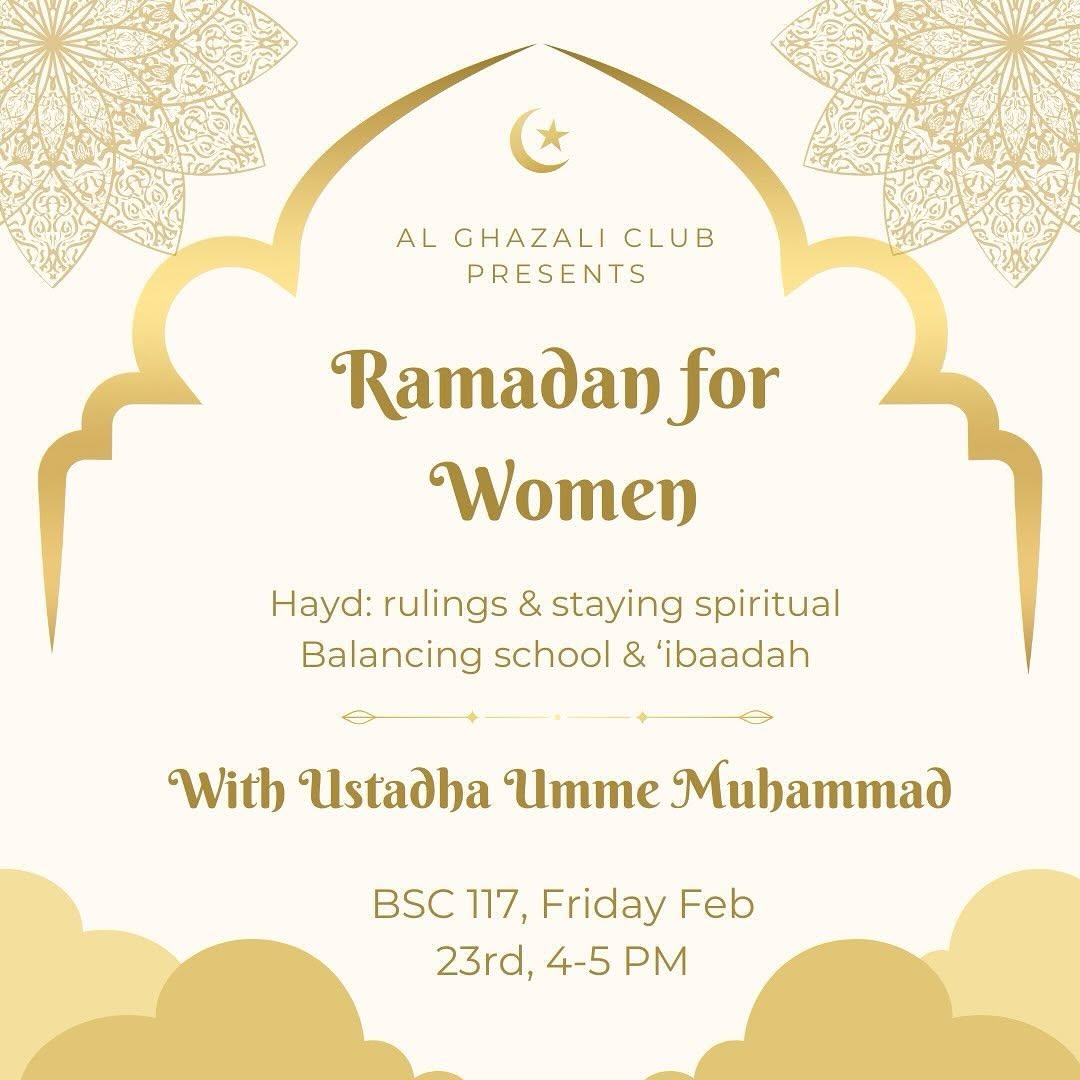
Ramadan for Women
2024
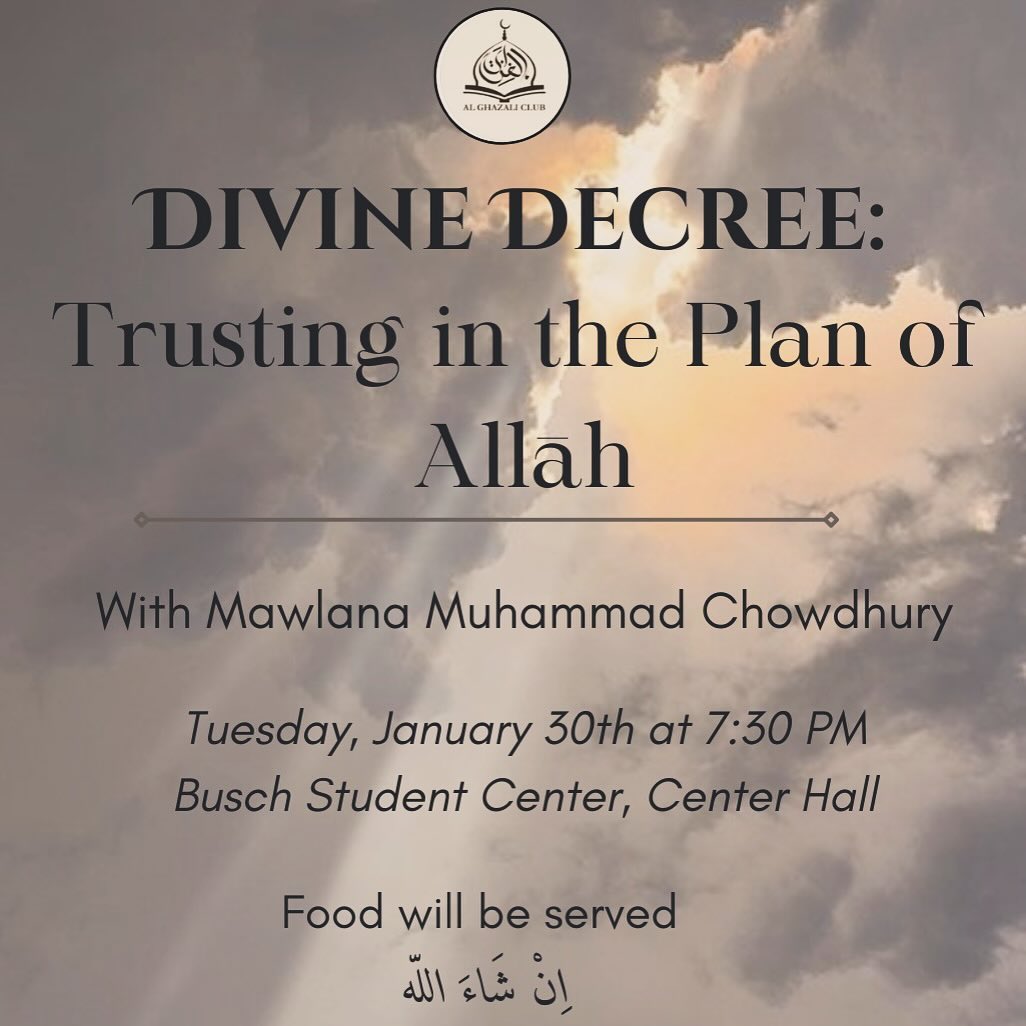
Divine Decree
2024
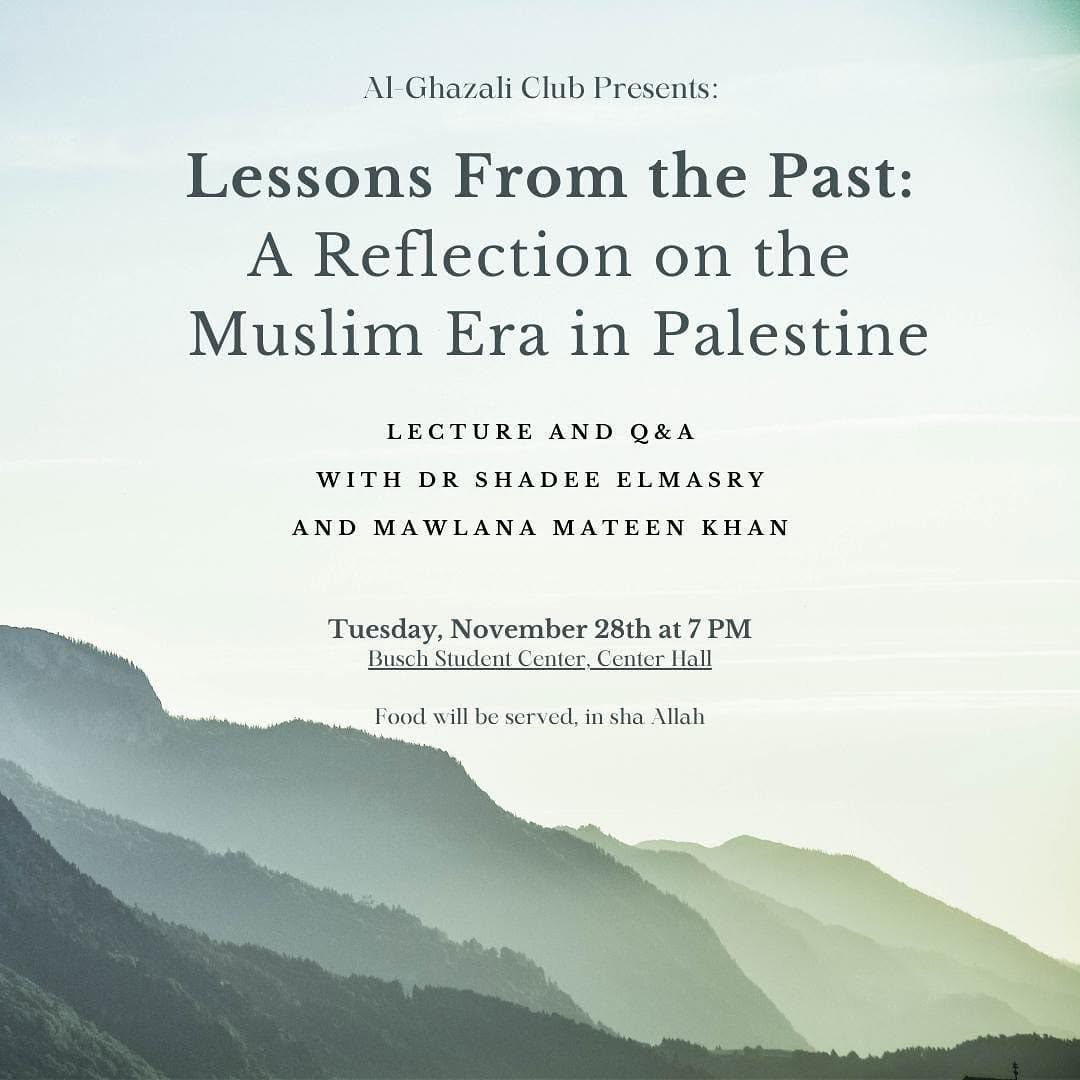
Lessons From the Past
2023
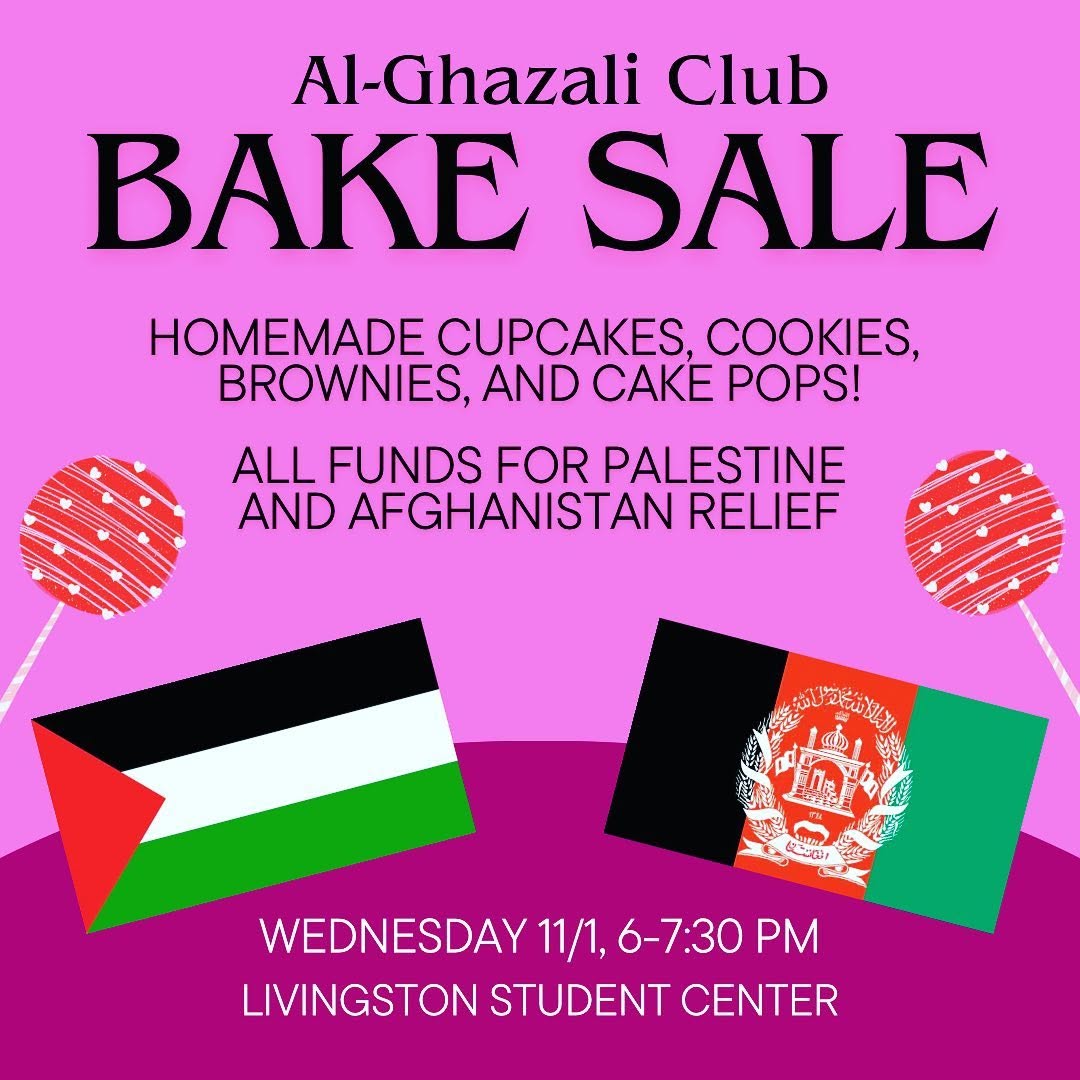
Bake Sale
2023
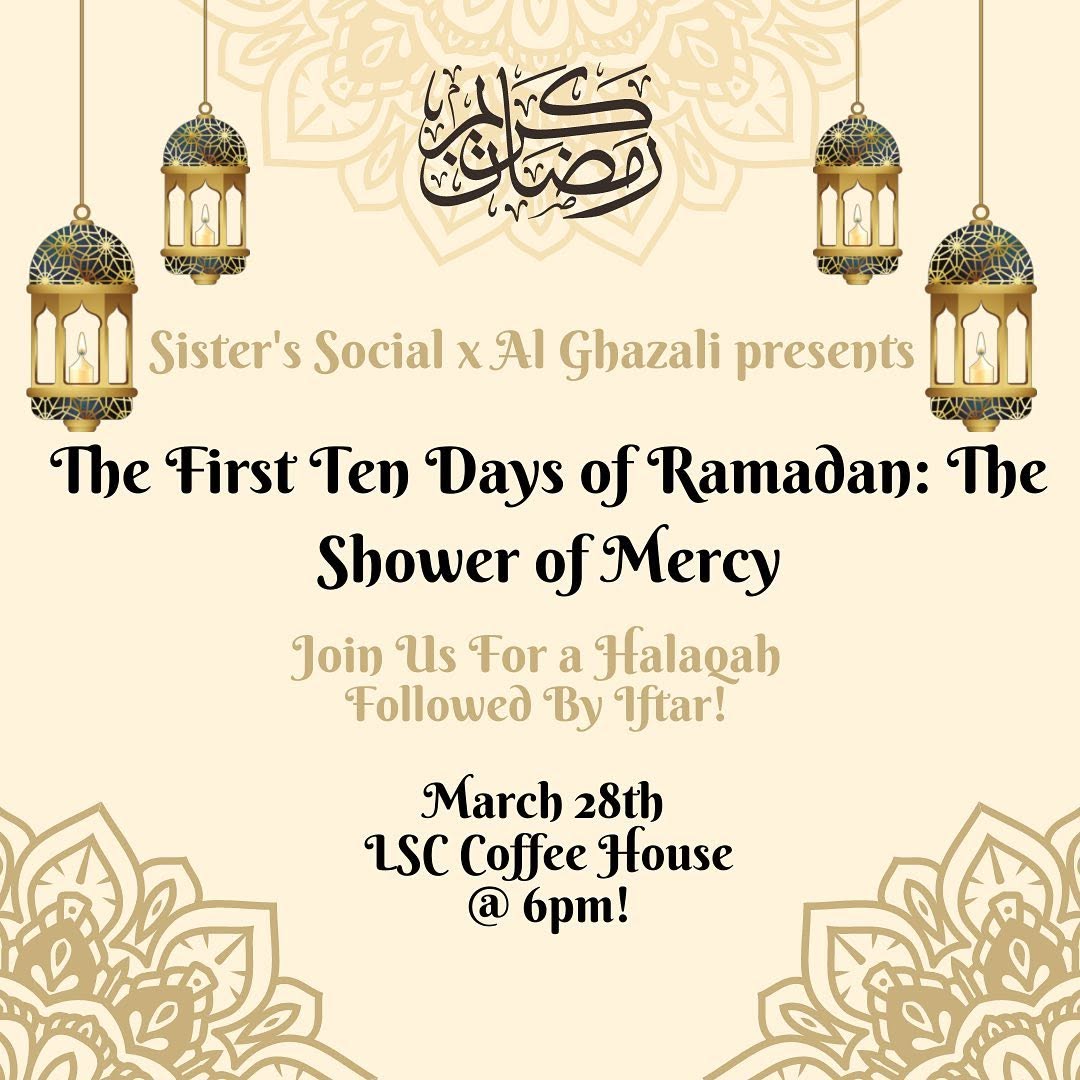
The Shower of Mercy
2023
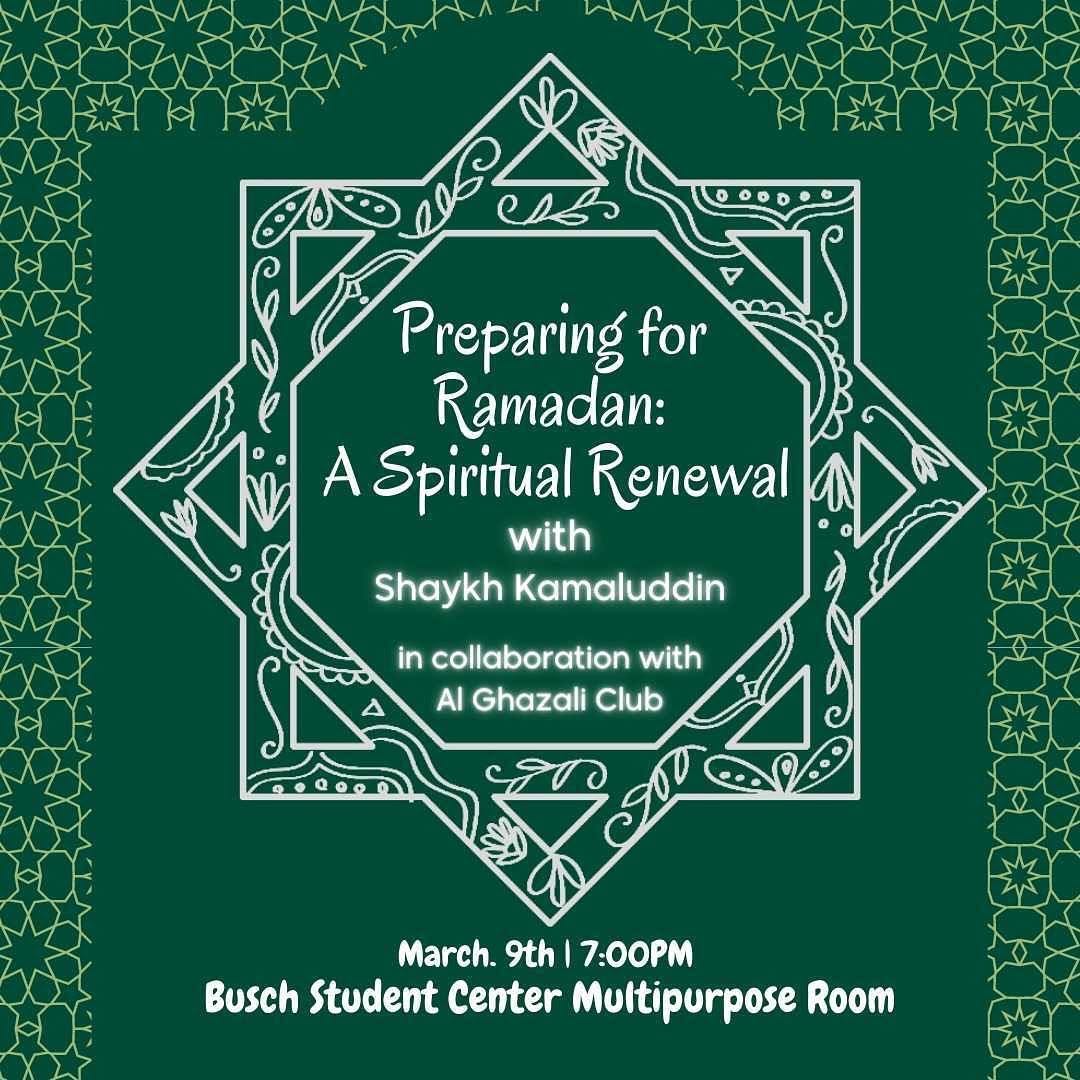
Preparing for Ramadan
2023
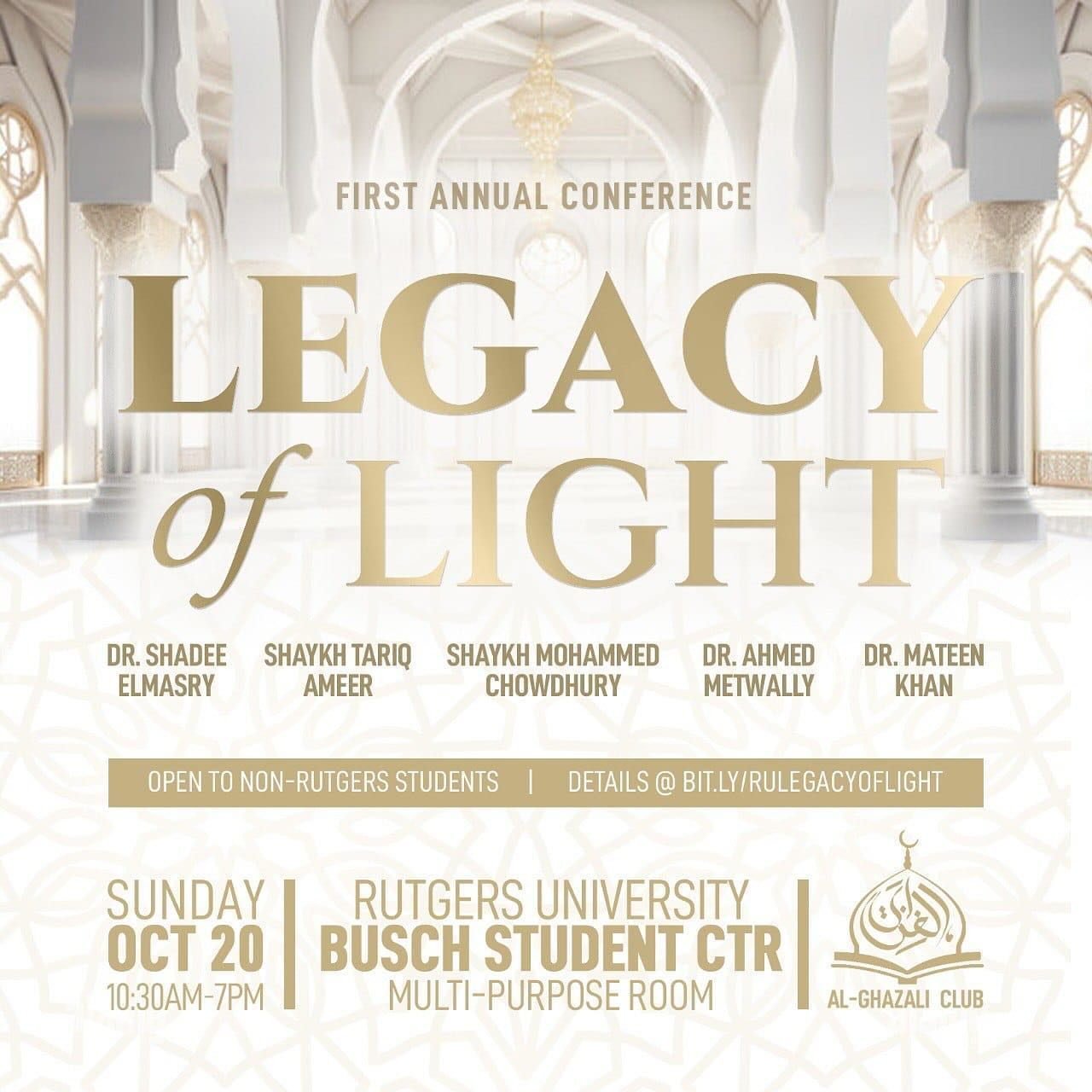
First Annual Conference
Sunday 20 October 2024 · 10:30 AM – 7 PM
The first · 2024
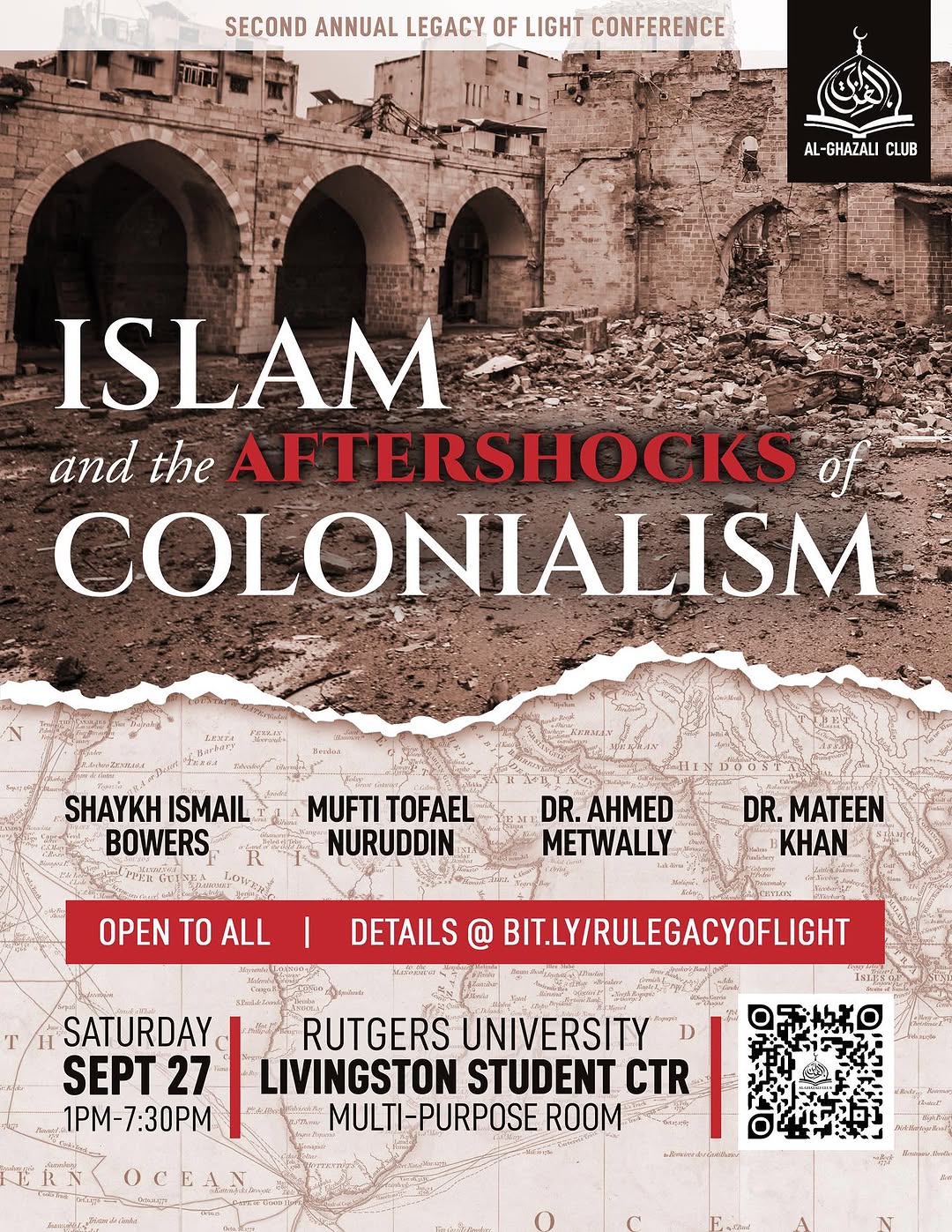
Second Annual Legacy of Light Conference
Saturday 27 September 2025 · 1 PM – 7:30 PM
The second · 2025
The club’s namesake
Iḥyā’ ‘Ulūm al-Dīn The Revival of the Islamic Sciences
Imam Abū Hāmid al-Ghazālī (1058–1111), known as Hujjat al-Islām, was one of the greatest scholars and spiritual masters in Islamic history. Born in the city of Tus in modern-day Iran, he was gifted with immense intellectual brilliance from an early age. His pursuit of knowledge began under some of the foremost scholars of his time, and he quickly mastered disciplines such as Islamic jurisprudence (fiqh), theology (kalām), logic, and philosophy. By the age of 33, he had been appointed as a professor at the prestigious Nizāmiyya Madrasa in Baghdad, where his lectures drew scholars from far and wide. His reputation as a scholar was unmatched, and he became a central figure in the academic world.
However, despite his towering intellectual achievements, Imam al-Ghazālī was not satisfied with mere outward success. Deep within his soul, he wrestled with spiritual doubts and sought the true path to attaining Allah’s pleasure. After years of internal struggle, he experienced a profound crisis that led him to abandon his prestigious post and withdraw from public life in 1095. He embarked on a decade-long spiritual retreat, seeking solace and guidance through solitude, prayer, and reflection. During this period, he traveled extensively to places like Damascus, Jerusalem, and Mecca, yearning for purification of the heart and closeness to Allah.
It was in this spiritual seclusion that al-Ghazālī authored his magnum opus, Iḥyā’ ‘Ulūm al-Dīn (The Revival of the Islamic Sciences), a masterpiece that integrated Islamic law, ethics, and spirituality. This monumental work addressed not only the external practices of religion but also emphasized the purification of the soul, sincerity in worship, and inner devotion to Allah. Al-Ghazālī’s writings became a lighthouse for those who sought to harmonize the intellect with the heart, combining deep rational inquiry with profound spiritual wisdom. His approach was not merely academic but deeply transformative, guiding people to realize that true knowledge is that which brings one closer to Allah.
Imam al-Ghazālī’s life exemplified the struggle of the nafs (lower self) in seeking the ultimate truth. His journey from worldly success to a path of spiritual enlightenment is a testament to his immense sincerity and piety. He was a man who, despite his brilliance and fame, chose to humble himself before Allah and dedicate his life to true servitude. His sincerity in both intellectual rigor and devotion to Allah makes him a timeless role model for anyone seeking to live a life in accordance with divine will.
Imam al-Ghazālī passed away in 1111, having left behind a legacy that continues to inspire seekers of knowledge and spirituality. His life reminds us that true success lies not in outward achievements but in the purification of the soul and striving to attain Allah’s pleasure. To emulate Imam al-Ghazālī is to commit oneself to the pursuit of knowledge, the purification of the heart, and the unwavering quest for nearness to Allah. His journey inspires us to seek not only the truths of this world but also the eternal truths that lead to the Divine Presence.